

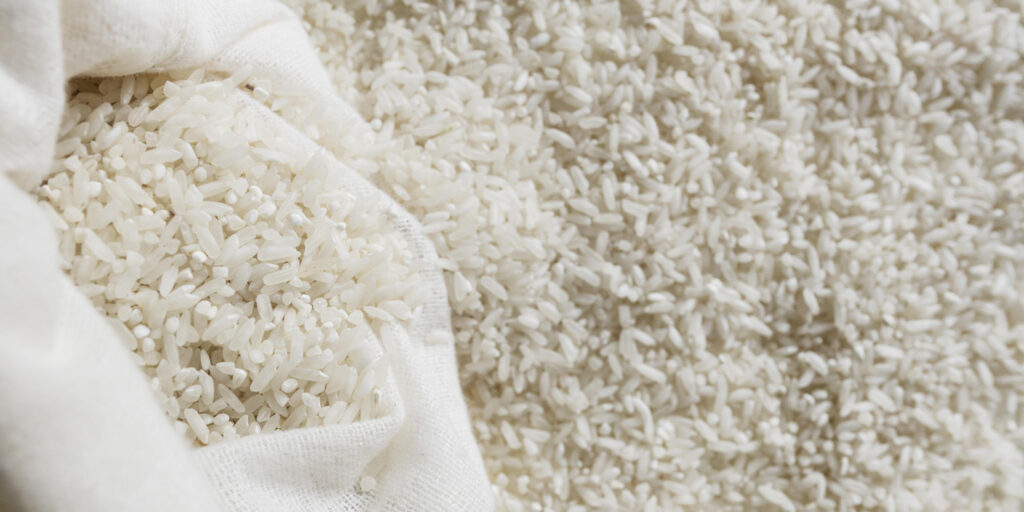
Prof Tajuddin Bantacut, Agricultural Industrial Technology Expert at IPB University, revealed the characteristics of oplosan rice that can be recognized by the naked eye. He explained that oplosan rice can be seen from the non-uniform color, different grain sizes, and the mushy texture of the rice after cooking.
“If you find rice that is different from the usual such as color, smell (aroma), texture and grains, it can be ‘suspected’ as rice that has been ooplos in the sense that there is quality damage or the presence of foreign objects,” he explained in an online interview on the sidelines of his busy teaching schedule at IPB Dramaga Campus, Bogor. (7/10).
In some cases, oplosan rice is also mixed with foreign additives including coloring agents or dangerous preservatives that can endanger health if consumed in the long term.
He urges the public to be wary of rice that looks unusual, has a strange color or smell. “Avoid buying rice without labels or from unclear sources. Wash the rice before cooking and be aware of any foreign objects floating around,” he said.
Regarding storability, he explains that ideally rice should only be stored for a maximum of six months to maintain its quality. This is because rice can also experience natural damage, especially if stored for too long.
According to him, even though rice has been stored in a controlled place, its quality can still decline due to environmental factors, pests, or microorganisms. “Damaged rice can be re-polished. However, if the damage is severe, physically, chemically or microbiologically, it is not suitable for consumption. Especially if it contains chemicals or preservatives, it can be dangerous for health,” he explained.
He added that there are three types of rice associated with oplosan circulating in the community. First, mixed rice mixed with other ingredients such as corn. This type is commonly found in some areas.
Second, “blended” rice or a mixture of several types of rice to improve flavor and texture. Third, rice that is mixed with unusual or damaged materials, then polished or refined to make it look good again, even though the quality has decreased.
Prof Tajuddin invites the public to be more careful when buying rice and be aware of quality fraud. In addition, wider education is needed so that people understand the health impacts of consuming damaged or contaminated rice.
“If managed well, as an agricultural country, Indonesia should not only focus on production, but also on the distribution and consumption of rice evenly and safely,” he said. (dh) (IAAS/NRA)
