

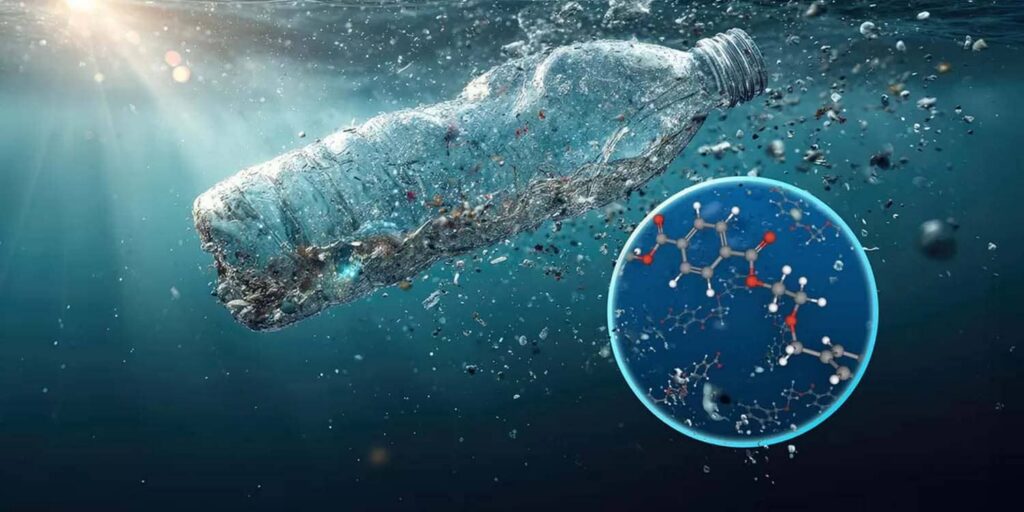
Prof Etty Riani, an expert in pollution and ecotoxicology from IPB University, emphasized that the plastic particles that have the potential to enter the human bloodstream are not microplastics, but rather nanoplastics, which are extremely small in size.
Prof Etty explained that nanoplastics are much smaller than microplastics, ranging from 1 to 1.000 nanometers. For comparison, one millimeter is equivalent to one million nanometers.
She explained that particles smaller than 100 nanometers have the potential to penetrate the intestinal wall and enter the bloodstream through cell membranes. “The size of plastic particles that are consumed and can pass through the stomach cannot be arbitrary. They must be at least smaller than 0,15 millimeters,” she said.
She emphasized that microplastics, as defined, are considered impossible to enter the amniotic fluid. This is because the size of these particles is too large to penetrate the digestive system and enter the bloodstream.
Prof Etty explained that there are several pathways through which plastic particles can enter the body. Particles measuring around 500 nanometers, for example, can enter through immune cells in the intestines. Meanwhile, particles measuring less than 100 nanometers can also enter through intestinal circulation. The intestines can also absorb particles measuring 100–200 nanometers through a process called endocytosis.
“Because the intestines cannot pass microplastics, they will be excreted in feces. They can be passed through the air, but they must be very small,” he explained.
He added that exposure through the air is related to pollutant particles such as PM2.5 and PM1.0. However, the particles that have the potential to enter deeper into the body are PM1.0, which are particles less than one micron or one thousandth of a millimeter in size.
Nanoplastics are also suspected of being able to enter other organs such as the brain and amniotic fluid, but they must be very small in size. This is because all food and drink consumed must first go through the digestive process before it can be absorbed into the bloodstream.
Regarding the detection of microplastics in the human body, Prof Etty emphasized that testing cannot rely solely on a regular microscope. A number of advanced analytical methods are needed to confirm the presence of plastic particles.
Some technologies that can be used include Fourier transform infrared spectroscopy (FTIR), gas chromatography-mass spectrometry (GC-MS), electron microscopy, and micro-Raman spectroscopy.
According to Etty, the use of a microscope alone risks misidentification. The particles that are visible could be plankton or other compounds, not microplastics.
“I happened to be in Osaka, Japan, at the time and thought it was microplastic. When it was shot with micro-Raman spectroscopy, it turned out that it was not microplastic. If only a microscope was used, it would be impossible to confirm,” she said.
She explained that micro-Raman spectroscopy is one of the more accurate methods for detecting very small plastic particles, including nanoplastics.
Prof Etty also emphasized the importance of caution when drawing conclusions about microplastic findings in the human body. Proper laboratory analysis is key to avoiding errors in interpreting research results. (dh) (IAAS/HNY).
