

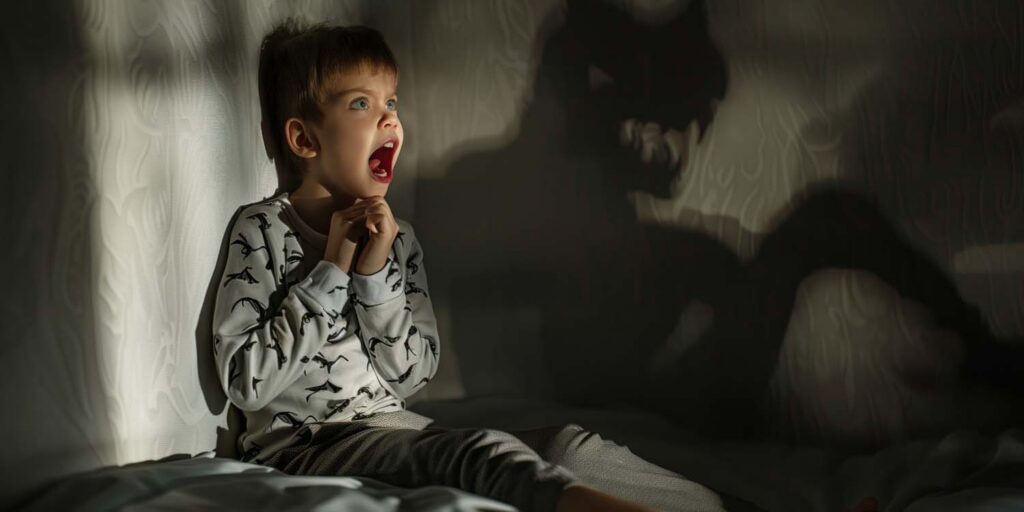
The phenomenon of children suddenly screaming hysterically during sleep or appearing extremely frightened without a clear cause often causes panic among parents. Recently, the term “night terror” has been widely discussed in society and on social media.
Responding to this issue, dr Yeni Quinta Mondiani, a lecturer at the Faculty of Medicine and Nutrition of IPB University, provided a scientific explanation so that the public does not develop misconceptions.
“Sleep is a very important biological function because it plays a role in physical recovery and the development of the child’s nervous system,” said dr Yeni at the beginning of her explanation.
Under normal conditions, she explained, sleep consists of several phases, namely the non-rapid eye movement (NREM) phase and the rapid eye movement (REM) phase. Deep sleep occurs during stages 3 and 4 of the Non-REM phase. During this stage, the body carries out restoration and recovery processes.
“Disturbances such as night terror belong to the group of parasomnias, which are partial arousal disorders from the Non-REM phase, as classified by the American Academy of Sleep Medicine,” she explained.
She added, “Sleep terror or night terror generally occurs in the first third of the night, approximately 60–90 minutes after a child falls asleep.”
Symptoms may include the child suddenly screaming in panic, appearing extremely frightened, crying, becoming restless, experiencing a rapid heartbeat, fast breathing, and sweating. During an episode, the child is usually difficult to wake and does not respond when comforted.
“After the episode ends, the child may appear confused for a moment and then return to sleep. The following morning, most children do not remember the incident,” dr Yeni explained.
In most cases, night terror is not dangerous and does not require special treatment, especially if it occurs infrequently. One of the most common triggering factors is lack of sleep.
“Children who are overly tired actually have a higher risk of experiencing these episodes. Therefore, maintaining sufficient and good quality sleep is the key,” she said.
She advised parents to remain calm when an episode occurs. “Do not wake the child forcibly. Ensure the environment is safe so the child does not get injured. If necessary, parents may record the episode as material for medical consultation,” dr Yeni suggested.
She also emphasized the importance of distinguishing night terror from seizures. In general, night terror episodes last longer and the movements are not always identical, whereas seizures are usually brief and stereotypical, meaning they follow the same pattern each time they occur. To confirm the diagnosis, an EEG (electroencephalography) examination can be conducted to record brain wave activity.
“When should parents consult a doctor? If the episodes occur very frequently, the movements are always the same and very brief, or if they cause injury,” she emphasized.
Concluding her explanation, dr Yeni stressed that night terror in most children is part of the maturation process of the nervous system and will improve over time.
“The most important thing is for parents to understand this condition rationally and continue maintaining good sleep patterns for their children,” she concluded. (AS) (IAAS/KAL)
