

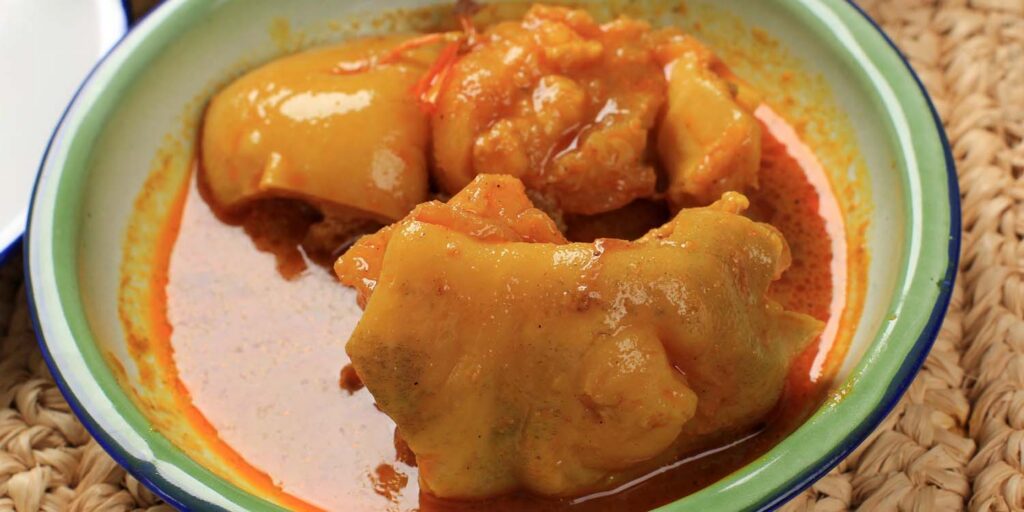
Beef tendon is often known as a food rich in collagen. Beef tendon is a type of connective tissue in cattle that consists of cartilage covering the bones and hooves of cattle without any hair attached to it.
Although its fat content is relatively low compared to some other parts of beef, consumption of kikil still needs to be limited. This was stated by Dr Astari Apriantini, an expert in animal nutrition and food technology from the Faculty of Animal Science at IPB University.
“Kikil has a savory taste and is quite high in nutrients, especially protein. The protein in kikil is mostly in the form of collagen,” she said.
Dr Astari explained that approximately 30 percent of collagen content can be found in the tendons of mammals such as cows, goats, and buffaloes. In 100 grams of tendons, the protein content can reach around 96 percent, contains no carbohydrates, and only about four percent fat.
According to her, the calorie content of tendons is also relatively lower than beef because their composition consists mostly of water and collagen. “The calories in tripe are around 146 calories per 100 grams, while in beef it ranges from 174 to 273 calories,” she explained.
In addition to protein, Dr Astari said that tripe also contains a number of important minerals such as sodium, selenium, iron, potassium, and calcium.
“Selenium plays an important role in maintaining the immune system, iron helps prevent anemia. Meanwhile, potassium plays a role in maintaining nerve function, muscle contraction, and normal heart rate. Calcium is also important for maintaining bone density and dental health,” she explained.
Although rich in collagen, she explained that the body cannot absorb collagen from food in its whole form. Collagen must first be broken down into peptides in order to be absorbed through the intestines.
“The peptides resulting from the breakdown of collagen are then used by the body as building blocks for proteins, for example to help form skin, hair, and nails,” she explained.
Collagen itself is known to have various benefits for the body, including helping to maintain skin elasticity, strengthening bones and joints, and supporting hair and nail health. In addition, collagen also has the potential to help accelerate wound healing and maintain healthy body tissues.
She also reminded that beef tendon also contains purines, which the body can process into uric acid, as well as cholesterol, at around 79 mg per 100 grams. This figure is slightly lower than beef, which ranges from 65-90 mg, but it still needs to be taken into consideration.
“Kikil contains moderate amounts of cholesterol and purines, so its consumption should be limited, especially for adults, people with gout, or those with a history of metabolic diseases,” she said.
She recommends one serving of kikil, about 75 grams, per meal. In addition, the method of preparation also needs to be considered so that the fat, cholesterol, and calorie content does not increase.
“If consumed in small amounts and prepared in a healthier way, such as boiled into soup, soto, or mixed into meatballs without coconut milk and excess oil, kikil is still safe to enjoy occasionally,” she concluded. (Fj) (IAAS/WSG)
