

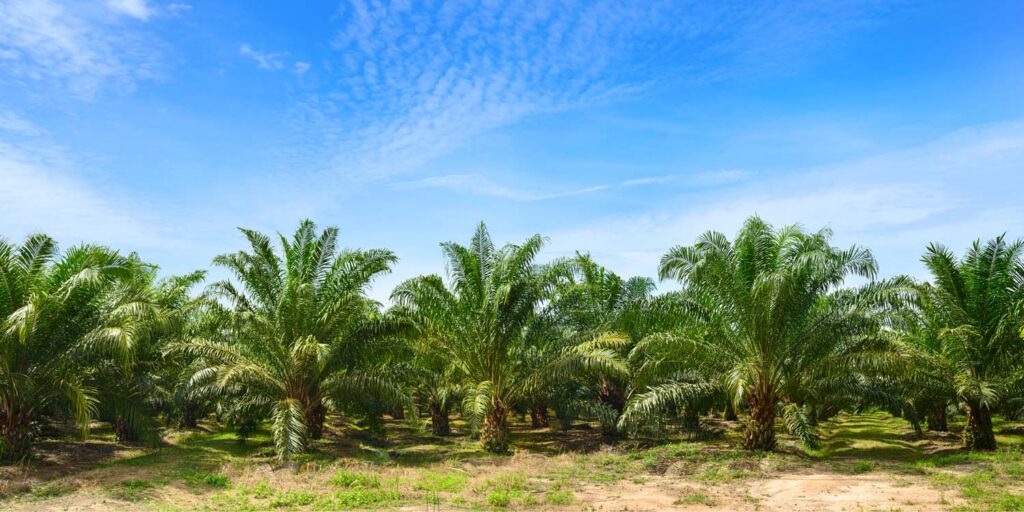
Oil palm is often accused of being a water intensive crop and the primary cause of flooding. However, research findings by IPB University Professor, Prof Hendrayanto, indicate that this assumption is not entirely accurate. According to him, floods and landslides are more frequently triggered by ecosystem degradation, land use changes, and climate anomalies that shape the cycle of hydrometeorological disasters.
In his Scientific Lecture as a Professor at IPB University on Saturday (4/25), Prof Hendrayanto presented the results of his research on the hydrology of oil palm as a plant and within oil palm plantations. “The results of this rather long-term study are worth sharing, especially regarding oil palm, as it is often unfairly blamed,” he said.
Based on scientific studies using a transpiration and evapotranspiration measurement approach, it was found that overall, the rates of transpiration and evapotranspiration in oil palm plantations are relatively comparable to those of other crops and plantation systems. The hydrological response of watersheds (DTA) dominated by oil palm also does not show worse conditions compared to DTA dominated by rubber.
He explained, “Oil palm plants are not water intensive because their transpiration rate is comparable to that of other plants such as rubber, mahogany, and acacia.” This statement, he noted, was made to correct the misconception that has long blamed oil palm for causing water waste and increasing the risk of flooding in various regions.
According to him, the main issue does not lie with any single commodity, but rather with the conversion and degradation of tropical rainforests. Such changes can result in oil palm plantations, settlements, or other monoculture forests. Uncontrolled exploitation, land use changes, and climate anomalies increase the frequency of disasters such as floods, landslides, and droughts.
He explained that while oil palm plantations provide significant economic contributions—particularly in job creation and as a source of foreign exchange—their expansion often triggers ecological changes, including alterations to the hydrological cycle, which subsequently leads to the perception that the crop is “water intensive.”
Prof Hendrayanto concluded that simplifying the issue by blaming oil palm as the primary cause of environmental degradation is not accurate. A more appropriate approach involves landscape management, integrated spatial planning of watersheds, and the implementation of best management practices in the use of natural resources. (dh) (IAAS/EPK)
