

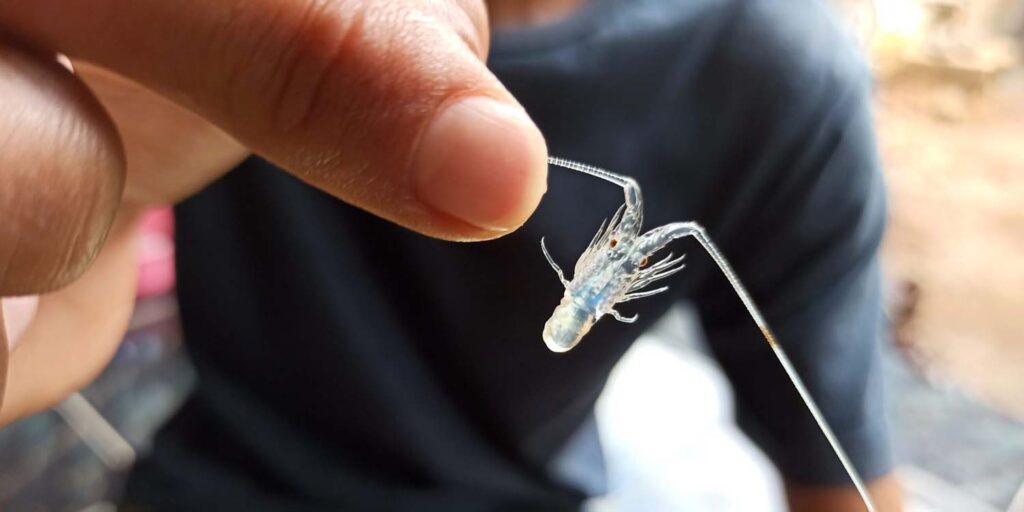
Regulatory changes regarding clear lobster seeds (BBL) that have taken place over more than a decade demonstrate the government’s efforts to balance conservation aspects and economic utilization. Most recently, the government issued the Regulation of the Minister of Marine Affairs and Fisheries (Permen KP) Number 5 of 2026, which serves as the foundation for the governance of BBL utilization after previous policies related to this commodity underwent several changes.
A lecturer at the Faculty of Fisheries and Marine Sciences (FPIK) of IPB University, Dr Akhmad Solihin, assessed that Permen KP Number 5 of 2026 brings a number of important changes. However, this regulation still requires a clear roadmap so that the national lobster potential can be utilized optimally and sustainably.
“Lobster regulations are developing very rapidly. Over a span of about 11 years, we have seen a shift from an approach that tended to prohibit towards increasingly detailed and specific regulations,” he stated.
He explained that regulatory developments are also marked by increasingly detailed regulations based on lobster species.
While at the beginning of the policy, all types of lobsters were treated generally, regulations issued after 2020 began to classify sand lobsters, rock lobsters, batik lobsters, and other species.
According to him, these developments demonstrate the government’s increasing understanding of the characteristics of national lobster resources.
Dr Akhmad also highlighted a fundamental change in Permen KP Number 5 of 2026. One of them is the elimination of provisions regarding overseas lobster cultivation activities, which previously required domestic investment.
He assessed that the elimination of this article returns the focus of BBL utilization to activities within the Indonesian territory.
In addition, the latest regulation also changes the wording of several important articles. The word “dapat”, which was previously used in the provisions for BBL catching, has been removed, so that catching activities are now strictly directed towards cultivation purposes.
“The implication is very massive because the flexibility that previously existed is lost. BBL catching must now be for cultivation,” he explained.
Although he supports the strengthening of governance, Dr Akhmad reminded that the government needs to formulate a roadmap for national lobster utilization based on domestic cultivation capacity.
According to him, if the current national capacity is only able to absorb a portion of the available potential, a phased plan is needed to improve the capabilities of human resources, technology, and investment.
He also highlighted the importance of clarity in quota mechanisms and supervisory authority between the central, provincial, and district/city governments to avoid creating uncertainty in the field.
On the other hand, approaches focusing on guidance and administrative sanctions need to be prioritized over the criminalization of business actors.
“Regulations must protect lobster resources, but at the same time, they must also provide legal certainty for fishermen, cultivators, and business actors. The university is ready to collaborate in providing assistance and scientific studies to support these goals,” he concluded. (dr) (IAAS/EXC)
