

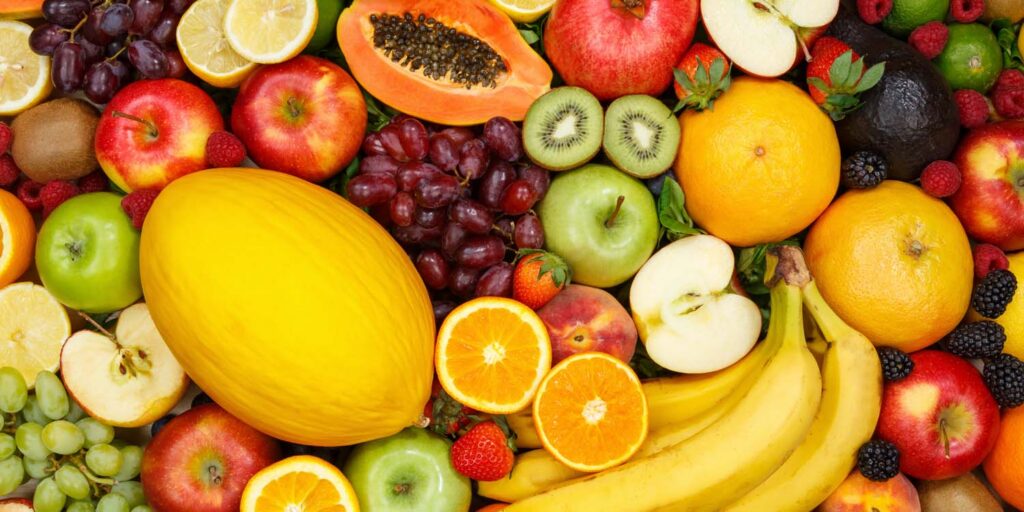
Fruit has long been known as a good source of vitamins and nutrients for health. However, behind its sweet taste lies fructose or fruit sugar which should be consumed in moderation.
Prof Antonius Suwanto of the Faculty of Mathematics and Natural Sciences (FMIPA) at IPB University warns that excessive fructose consumption can increase the risk of gout, hypertension, and metabolic disorders.
Fructose is a type of simple sugar commonly found in fruits, especially very sweet ones. Additionally, fructose is present in granulated sugar, sweetened beverages, candy, pastries, and various processed foods.
Why Can Fructose Trigger Gout?
Prof Antonius explains that fructose, glucose, and sucrose are sugars that are very common in daily life. However, the way the body processes fructose differs from that of glucose.
“Glucose is used by various cells in the body as an energy source. Meanwhile, most fructose is metabolized in the liver through a specific pathway that allows it to be directly converted into fat,” he said in the IPB Podcast, which aired on the IPB TV YouTube channel.
This process, he continued, requires a large amount of energy derived from adenosine triphosphate (ATP). When ATP is used excessively, the body produces byproducts that are ultimately converted into uric acid.
“If a large amount of fructose is consumed, it will be converted into fat, and this process ultimately produces uric acid as a byproduct,” explained the expert in microbiology, biotechnology, and molecular genetics.
He added that uric acid is not only associated with joint pain or gout. This compound can also reduce the availability of nitric oxide, which helps maintain the flexibility of blood vessels. As a result, blood vessels become stiffer, potentially leading to higher blood pressure.
From a Survival Mechanism to a Health Threat
Prof Antonius explained that the body’s ability to convert fructose into fat was originally an evolutionary mechanism to help humans survive when food sources were limited.
In the past, fruit was only available seasonally, so fat reserves served as a vital energy source when food was scarce. However, today fructose can be easily found in a wide variety of foods and beverages consumed daily.
“Given the current state of human society, there are abundant sources of fructose everywhere. If we don’t consume it more wisely, what was once a survival mechanism can actually lead to disease,” he said.
Therefore, he urged the public to maintain a balanced intake of fruit and sweet foods. A sensible diet is essential to prevent an increased risk of gout, hypertension, obesity, and other metabolic disorders. (Fj) (IAAS/KQA)
