

Breaking the fast is not just about relieving hunger and thirst, but also an important moment to restore the body’s energy after more than 12 hours of fasting.
The choice of food, especially fruit, is a major factor in restoring the body’s energy and staying healthy during Ramadan.
Professor Katrin Roosita, Chairperson of the Faculty of Medicine and Nutrition (FKGiz) at IPB University, explains that during fasting, the body experiences limited energy intake, especially glucose, which is the primary energy source for the brain.
When glycogen reserves in the liver deplete, the body switches to using fatty acids as an alternative energy source. “This process produces ketones, which the body can utilize as an alternative energy source,” she said.
Therefore, according to Prof Katrin, when breaking the fast, it is important to immediately replenish energy reserves with simple carbohydrates such as glucose and fructose.
Both of these natural sugars are found in abundance in fruits. One of the most recommended is dates, which are high in fructose and were recommended by the Prophet Muhammad (peace be upon him) to be consumed when breaking the fast.
She added that fructose has advantages over glucose derived from sugar cane or flour.
“The advantage of fructose is that it does not cause a drastic spike in blood sugar levels, making it safer, especially for diabetics,” she said.
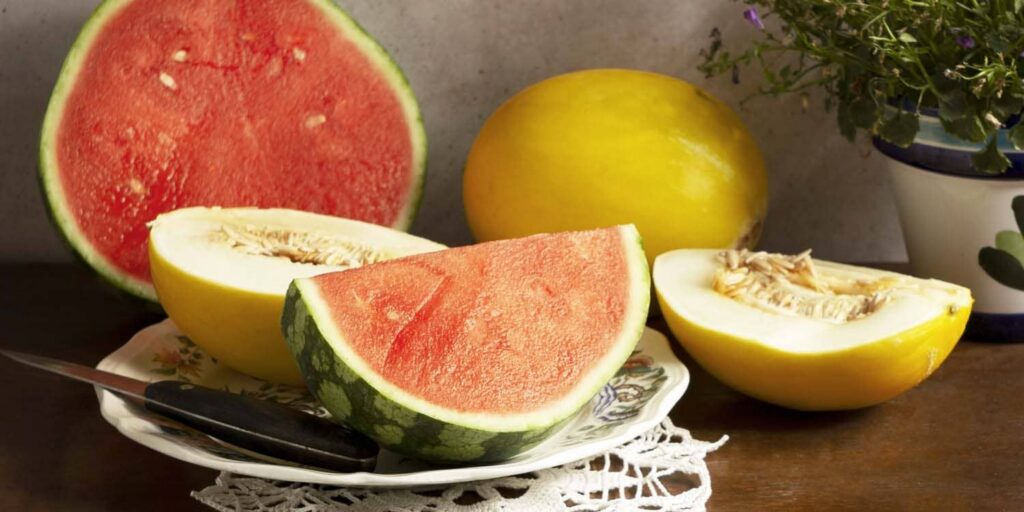
In addition, Prof Katrin recommends fruits with high water content such as watermelon, melon, and papaya. These fruits not only contain fructose, but are also rich in water, vitamins, and minerals that help maintain the body’s fluid balance.
“Papaya, for example, contains beta-carotene as a provitamin A that is beneficial for the body,” she said.
On the other hand, she reminded that not all fruits are suitable for consumption on an empty stomach. Limes should be avoided because their high acidity can irritate the stomach.
Durian should also be limited because its high sugar content has the potential to trigger a spike in blood glucose. Meanwhile, jackfruit has fiber that is difficult to digest and can cause bloating, and salak should be consumed wisely by maintaining the white layer of its skin.
Prof Katrin also recommends consuming two to three servings of fruit per day, equivalent to 100–150 grams. This consumption pattern helps meet the body’s needs for glucose, fructose, fiber, vitamins, and minerals.
She emphasized that even though mealtimes during Ramadan are shorter, nutritional intake must still be considered. “This is to keep the body healthy and fit throughout the fasting period,” she said. (dr)(IAAS/LAN)
