

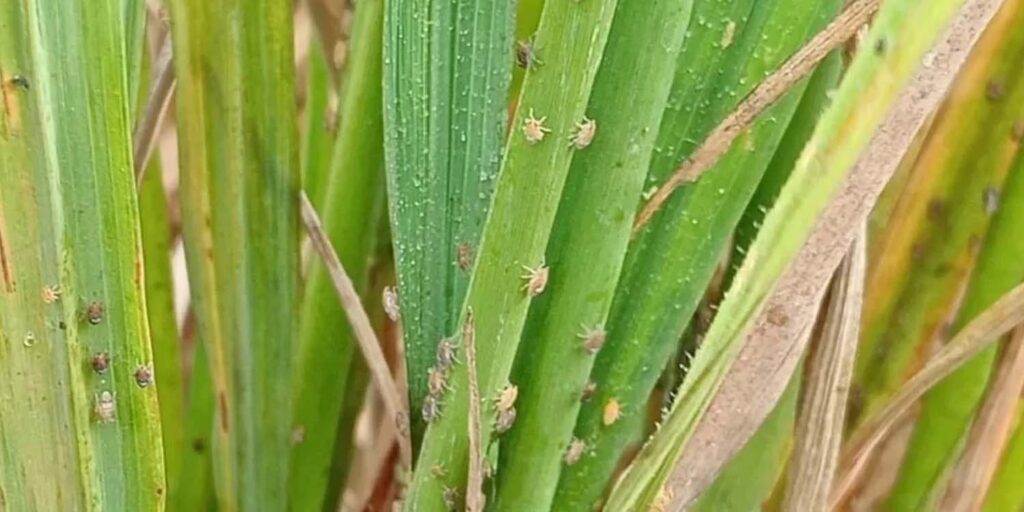
The threat of a prolonged drought caused by the 2026 El Niño phenomenon not only impacts food production but also triggers a surge in pest infestations. In response to this situation, IPB University academics are offering a simple, affordable solution that can be implemented on a large scale by farmers.
Prof Hermanu Triwidodo, a professor at the Faculty of Agriculture at IPB University, emphasized the importance of preemptive measures in controlling plant pests (OPT), particularly rice stem borers.
“El Niño is typically followed by OPT, with a tendency for stem borers, and their attacks are usually severe. If precautions aren’t taken from the planting season onward, the impact could be widespread. That’s why a mass campaign is needed,” he said during a working visit by Agriculture Minister Andi Amran Sulaiman to the IPB Science Techno Park in Bogor on Thursday (4/9).
This phenomenon, dubbed “Godzilla El Niño,” is projected to last from April through October 2026, posing the risk of a prolonged drought that will not only reduce rice production but also trigger increased pest attacks such as rice stem borers and brown planthoppers (WBC) across major production centers.
According to Prof Hermanu, the integrated pest management (PHT) approach needs to be strengthened through preemptive strategies, namely prevention before the planting season. This approach is considered far more effective and economical compared to control measures taken after a pest outbreak has occurred.
One of the most effective measures is collecting clusters of rice borer eggs during the seedling stage. It is important to do this early in the growing season to suppress the initial population.
The method is simple, requires no expensive technology, and is easily carried out by farmers. “The tools are simple you can use an upside down plastic bottle. This is a practical step to prevent a rice borer outbreak early on,” he added.
Economically, this preemptive measure has proven highly efficient. A single cluster of rice borer eggs typically contains around 50 eggs and can cause damage to up to 300 rice panicles, equivalent to 1,2 kg of harvested dry grain (GKP).
Assuming a price of Rp6.500 per kilogram, the potential loss amounts to Rp8.125 per cluster of eggs. This means that a small action such as destroying a single cluster of eggs during the seedling stage can prevent economic losses of that magnitude.
Furthermore, Prof Hermanu cautioned that the greatest threat actually comes from the brown planthopper (WBC). Thousands of hectares of rice fields can suffer total crop failure within a matter of days. In addition to physical damage to plants, the WBC also acts as a vector for the dwarf mosaic and dwarf grass viruses, which render the plants unable to produce.
As part of the solution, he advocates for a participatory approach involving the community, including students. Collecting egg clusters can be turned into an educational activity with incentives ranging from Rp500 to Rp2.000 per cluster, depending on the pest population density.
“In addition to helping farmers, this initiative also serves as a way to foster a love for agriculture among the younger generation,” he added.
Concluding his remarks, Prof Hermanu stated, “Cost effective preventive approaches like this are key. If we can control the population from the start, the rice field ecosystem will remain balanced, insecticide use can be reduced, and the risk of major pest outbreaks like WBC can be avoided.” (*/Rz) (IAAS/LAN)
