

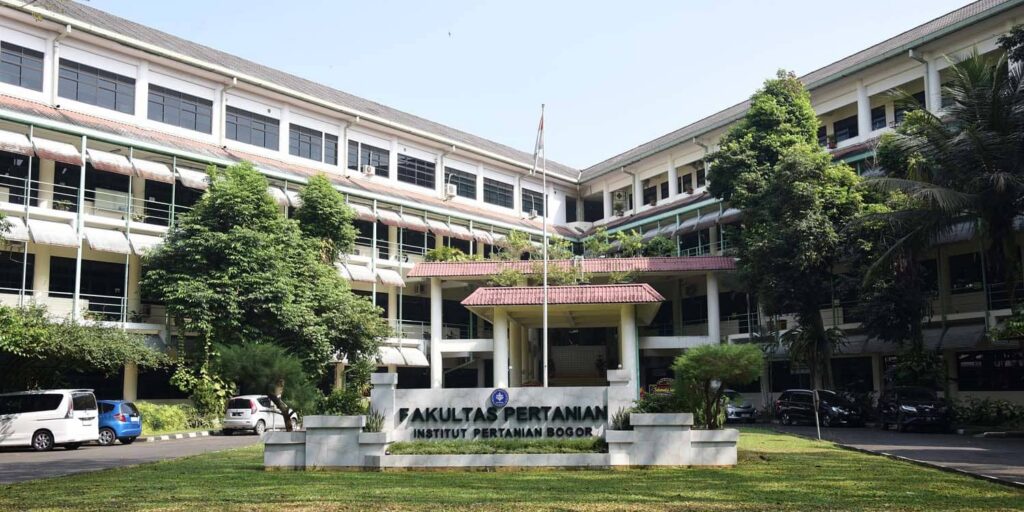
As the oldest faculty at IPB University, the Faculty of Agriculture (Faperta) continues striving to maintain its relevance amid changing times.
In recent years, Faperta has introduced various breakthroughs, ranging from the establishment of the Smart Agriculture undergraduate study program, the registration of 127 superior plant varieties, to the development of implementation models within communities.
The Dean of the Faculty of Agriculture IPB University, Prof Suryo Wiyono, emphasized that in the past one to two years Faperta has recorded several strategic achievements. “The Faculty of Agriculture at IPB University is actually the oldest faculty, a legend, and a reference point for agricultural faculties in Indonesia,” he said.
He explained that one of the main achievements is the opening of the Smart Agriculture Undergraduate Program, which ranks among the five most sought after study programs at IPB University.
In addition, Faperta is known for innovations with wide impacts. Over the past ten years, 165 innovations have been recorded, consisting of 127 granted plant variety protections and around 30 other technology patents, including biofertilizers, biopesticides, and precision fertilization technologies.
“Our innovations do not stop in laboratories, but are implemented through development models in communities,” he said.
One example is the IPB Innovation Village in Subang, covering 500 hectares and focusing on rice development from upstream to downstream. In addition, upland rice technology has been implemented in around ten regencies, including Bojonegoro, Gunung Kidul, Bantul, Bogor, Murung Raya, and Berau. This implementation responds to the challenges of limited rice fields and the need to strengthen national food security.
In terms of education, Faperta applies the 2025 curriculum with project based learning and case based learning approaches. According to Prof Suryo, this approach is highly relevant to agriculture, for example in diagnosing plant diseases directly in the field.
Faperta also actively initiates intensive collaborations with international partners, one of which is with Gyeongsang National University in the development of Smart Agriculture, lecturer and student exchanges, as well as the provision of equipment and teaching materials.
In the field of leading research, Faperta focuses on developing climate-adaptive varieties, precision and smart farming technologies, and microbial technologies for disease control, drought and salinity tolerance, as well as mine reclamation. International institutions such as the World Bank have even positioned Faperta as an entry point for soil health development in Indonesia.
Looking ahead, Prof Suryo aims to strengthen Faperta’s global recognition while maintaining national and community-oriented perspectives. “We want the academic community to be globally engaged while still maintaining a national orientation,” he emphasized.
In addition, he is committed to ensuring that innovations from Faperta generate significant economic impacts and to carrying out continuous modernization across all aspects of the faculty. (dr) (IAAS/ADF)
