

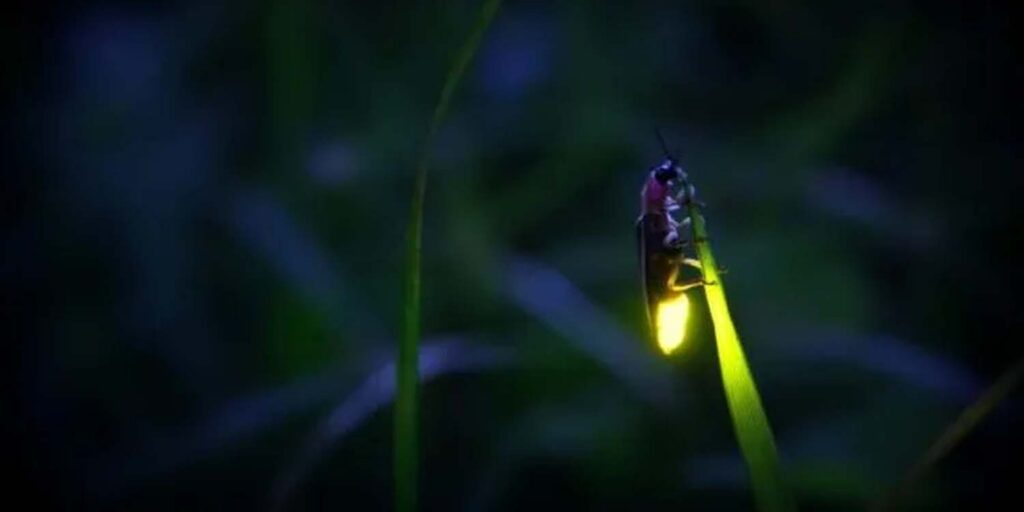
Recently, many internet users have complained that it is becoming increasingly difficult to find fireflies in the wild. This phenomenon is not merely a matter of nostalgia, but is based on solid scientific evidence.
According to Prof drh Upik Kesumawati Hadi, a lecturer and entomology researcher at the School of Veterinary Medicine and Biomedical Sciences (SKHB) at IPB University, the scarcity of fireflies is one indicator of declining environmental quality.
“Fireflies are bioindicators, organisms whose presence or absence can reflect the health of an ecosystem. When environmental quality deteriorates, their populations will rapidly decline or even disappear,” she explained.
She noted that the decline in firefly populations is not limited to Indonesia but is a global phenomenon. Data from the International Union for Conservation of Nature (IUCN) indicate that approximately 11–20 percent of assessed firefly species are classified as threatened. In fact, several species native to Southeast Asia that inhabit mangrove areas in Indonesia, Malaysia, and Thailand have been classified as vulnerable.
“In Indonesia alone, various entomological studies show that firefly populations have experienced a drastic decline, particularly in urban areas. These luminous insects are highly sensitive to environmental changes, ranging from shifts in soil moisture to pollution,” said Prof Upik.
According to her, habitat destruction is the main factor causing the decline in firefly populations. The conversion of green spaces, swamps, and rice fields into residential and industrial areas is eliminating the habitats of larvae, which require moist soil to develop.
In addition, light pollution from overly bright LED lights also disrupts the fireflies’ mating process. Artificial light makes it difficult for male fireflies to detect light signals from females, causing them to fail to reproduce. Other contributing factors include the use of chemical insecticides, climate change that triggers droughts, the concreting of irrigation channels, and increasingly massive urbanization.
Nevertheless, fireflies can still be found in habitats that are moist, have minimal light pollution, and are free from contamination. Some of these include mangrove areas, pristine riverbanks, swamps, traditional rice paddies, organic farms, and the damp forest floor of tropical rainforests.
Prof Upik warns that if habitat destruction and light pollution continue, it is not impossible that future generations will only know fireflies through books, museums, or digital media. Therefore, she urges the public to play an active role in protecting firefly habitats.
Simple steps such as not covering the entire area with concrete, reducing the use of overly bright outdoor lights, using organic fertilizer, and keeping rivers and waterways clean can help preserve the population of these unique insects.
“The survival of fireflies depends heavily on the preservation of their habitat. Protecting the environment also means ensuring that future generations can continue to enjoy the natural glow of fireflies,” she concluded. (Lp)(IAAS/LAN)
