

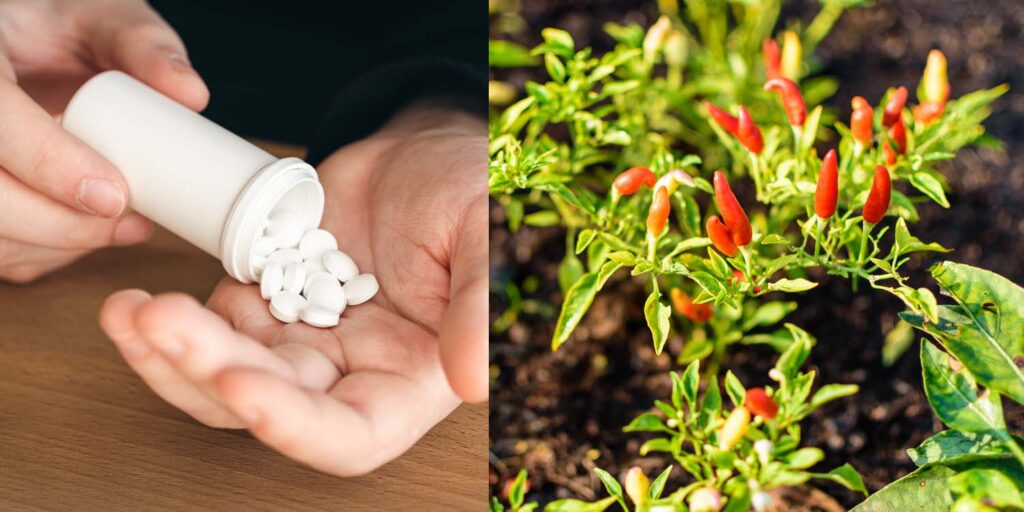
Dr Efi Toding Tondok, the person in charge of the Plant Clinic at the Faculty of Agriculture, IPB University, responded to social media content promoting paracetamol as a plant growth enhancer.
She firmly stated that she does not recommend using this human medication on plants because it may pose unknown long term risks, ranging from killing certain organisms to triggering pathogen resistance.
“Paracetamol was specifically developed for human health, and there is currently no research or data proving that its compounds are needed by plants or that it can enhance plant growth, particularly in chili plants,” she said.
Dr Efi explained that medicines intended for humans are administered in very limited and carefully measured doses to ensure safety. When applied to plants, not only is the cost significantly higher, but its effectiveness has never been scientifically verified.
“Paracetamol is designed for human health, and no studies have been conducted on its use in plants. Therefore, its application to plants is not recommended. If the goal is to improve plant growth, using fertilizers specifically formulated for plants would be much better. Manure, for example, would be far more beneficial than paracetamol,” Dr Efi explained.
She acknowledged that certain compounds found in human medicines, such as salicylic acid, are also needed by plants to enhance their resistance. However, formulations intended for humans are much purer and more expensive. Moreover, their use over large areas could be harmful.
“Using such substances on plants, especially across large areas, may create impacts that we do not yet understand. For example, they could kill certain organisms or contribute to resistance against medications, potentially causing microorganisms, including human pathogens, to become resistant to treatment,” she emphasized.
For this reason, Dr Efi advised the public to continue using fertilizers specifically formulated for plants, as their safety for the environment, plants, and consumers has been thoroughly studied. As a low cost, safe, and readily available alternative, she suggested making use of common household materials.
“For small scale gardening, such as plants grown in home gardens or pots, people can use simple materials that are often discarded, such as rice-washing water. It can provide beneficial nutrients for plants. Therefore, do not use medicines intended for humans on plants, because the risks are likely to outweigh any potential benefits, many of which are not yet fully understood,” she concluded. (IAAS/KAL)
