

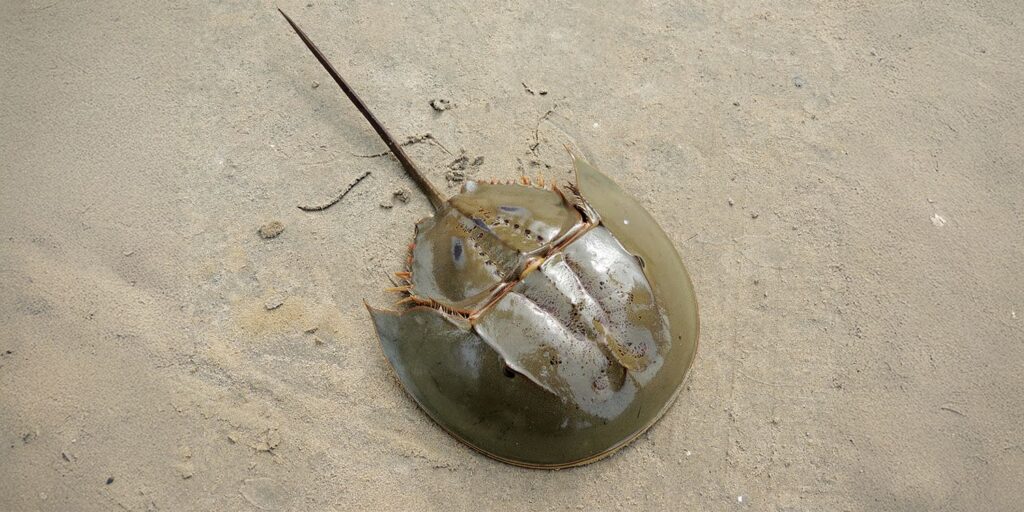
The increasing number of illegal trade cases involving horseshoe in various coastal areas of Indonesia has become a serious warning for efforts to protect this ancient marine species, which has been designated as a protected animal. In one recent case, hundreds of horseshoe crabs confiscated through law enforcement actions were secured and subsequently released back into their natural habitat.
A Professor at the Faculty of Fisheries and Marine Sciences (FPIK), IPB University, Yusli Wardiatno, emphasized that wildlife rescue efforts must be followed by a carefully designed and scientifically based release process in order to avoid creating new ecological impacts in coastal areas.
“The release of horseshoe crabs is not merely about transferring animals from holding facilities back into the sea, but rather constitutes an integral part of conservation processes that must comprehensively consider biological, ecological, and technical aspects,” he stated.
From a biological perspective, the health condition of individual animals is a fundamental factor. Horseshoe crabs to be released must be in good physical condition, free from serious injuries, infections, or excessive physiological stress, as these conditions strongly determine their survival capacity once returned to the wild.
“Body size and life stage also need to be carefully considered. Individuals that are still too small or in a weakened condition have a lower survival rate when released into natural environments,” he explained.
In addition, the ecological characteristics of the habitat are a key determinant of release success. Release sites must possess environmental features that are suitable for the life requirements of horseshoe crabs, including the type of benthic substrate, salinity conditions, water depth, as well as current and wave dynamics.
The timing of release should also be aligned with natural environmental conditions and the period of natural activity of horseshoe crabs in coastal areas, so that the adaptation process can occur more optimally.
“Ideally, release activities should be conducted in habitats that are still relatively well preserved and experience minimal human disturbance, allowing horseshoe crabs to promptly resume their natural behaviors such as foraging, localized movement, and for mature individuals participation in reproductive cycles,” he added.
Prof Yusli stressed that the success of release efforts should not be measured by the number of individuals released, but rather by their ability to survive and resume their ecological functions as part of coastal benthic communities.
“Large scale releases must take into account the carrying capacity of local ecosystems in order to avoid generating new pressures on other benthic organisms that have already occupied the habitat,” he said.
He also reminded that special caution is required when released individuals originate from geographical locations different from the release sites. Within the context of modern conservation practices, population mixing without adequate scientific assessment may have implications for the genetic structure of local populations that have naturally adapted to their environments.
As part of responsible conservation practices, release activities should ideally be followed by post-release monitoring through periodic field surveys. Such monitoring may include observations of individual presence, habitat conditions, and medium to long-term success indicators, such as reproductive activity and the emergence of juveniles in the wild.
“Post-release monitoring is an integral component of conservation. These activities need to be carried out collaboratively among government institutions, universities, conservation organizations, and coastal communities,” he stated.
Furthermore, Prof Yusli emphasized that preventing illegal horseshoe crab trade requires a long-term approach that integrates law enforcement, public education, and scientific research.
“Coastal communities need to be positioned as conservation partners. With a sound understanding of the ecological value and protected status of horseshoe crabs, conservation efforts can be implemented more effectively and sustainably,” he concluded. (AS) (IAAS/FHD)
