

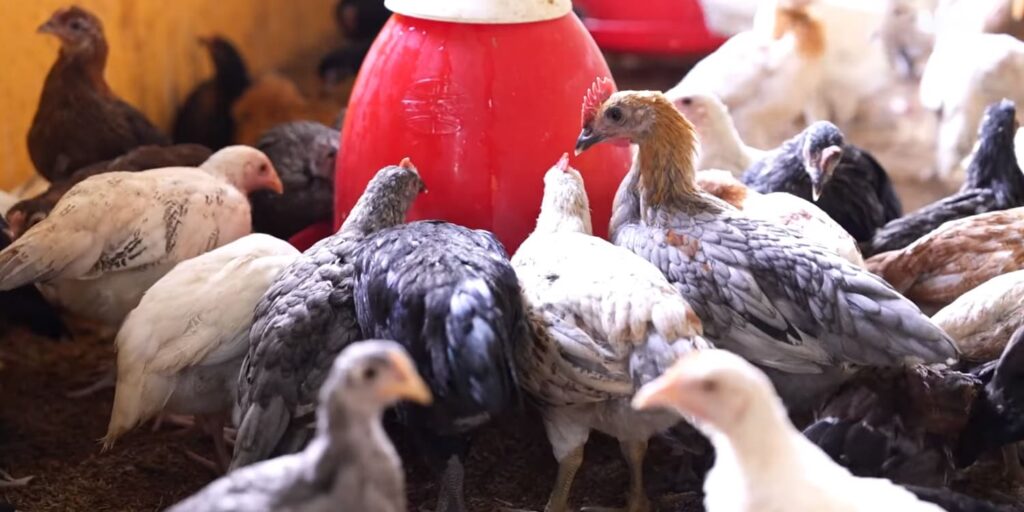
Amid challenges in meeting national demand for animal protein, innovative high quality local chicken breeds from IPB University are beginning to attract attention from the Ministry of Agriculture (Kementan). IPB chickens are considered to have the potential to be developed as a healthier and more adaptable alternative food source for smallholder farmers.
Professor Cece Sumantri, a faculty member at the Faculty of Animal Science at IPB University, stated that discussions with the Ministry of Agriculture have led to plans for large-scale production. “I was asked to develop a program to produce 5.000 breeding hens by the end of the year,” he said.
He explained that IPB University is prepared to meet the breeding stock procurement target requested by Kementan, supported by hatching facilities and a network of partner farmers. This readiness is also bolstered by prior development through the Inter-University Flagship Program (PUAPT) in the establishment of the IPB Poultry Breeding Center as part of efforts to support national food security.
The IPB chicken is a composite local breed resulting from the crossbreeding of four strains: Pelung crossed with Sentul, and Kampung crossed with Cobb parent stock. As such, the IPB D1 chicken is a local breed resulting from genetic breeding efforts that have been underway since 2010. This innovation has produced broiler chickens with relatively rapid growth, improved feed efficiency, and superior meat quality.
The advantages of the IPB chicken are also evident in its production performance and meat quality. At around 10–12 weeks of age, the chicken’s weight can reach over 1 kilogram and even up to approximately 1,8 kilograms with optimal feed. Additionally, the IPB chicken is relatively resistant to certain diseases such as Newcastle disease (ND) and salmonella, making it more adaptable in farming systems.
From a nutritional perspective, research supported by the LPDP program indicates that IPB chicken meat contains high protein levels of approximately 19,1 percent, essential amino acids of about 4,58 percent, and omega-3 fats of around 2,34 percent. The meat also has a relatively low cholesterol level, at around 66,12 mg per 100 grams, and is rich in important minerals such as iron (Fe) and zinc (Zn), making it a potential healthy functional food.
Collaboration and Innovation in Development
The collaboration plan with the Ministry of Agriculture focuses on accelerating the production of breeding stock. However, government budget support is directed more toward operational aspects such as feed and husbandry management, rather than infrastructure development.
IPB’s poultry development is also strengthened through partnerships with various collaborators. These include the SME UD Citra Lestari Farm in Bekasi, which operates from day old chicks (DOC) through to processed products and restaurants; the Sinar Harapan Farm (SHF) Breeders’ Group in Jampang Tengah, Sukabumi Regency; and Plasma Nutfah Unggul Indonesia in Boyolali.
In addition, feed innovations continue to be developed through internal research. One example is research by Prof. Sumiati from the Faculty of Animal Science at IPB University, Department of Nutrition and Feed Technology (INTP), which utilizes lemuru fish oil to increase the omega-3 content in IPB chicken meat.
In addition to strengthening the upstream sector, IPB chicken has also been developed through downstream processing via various food processing research projects that have produced a wide variety of ready to eat processed products. One such initiative, led by Prof. Irma Isnafia Arief, has successfully increased the product’s value-added potential and market competitiveness.
From a commercialization perspective, IPB chicken has established itself as a premium brand known for healthy meat and targeting specific markets, such as hospitals. “The chicken is already commercially viable. We already have a brand and a market,” she said.
Although the market is beginning to take shape, current development efforts remain focused on breeding stock production. “It’s a shame if the breeding stock is sold for slaughter. It should be multiplied first to support the industry,” she noted.
He hopes that collaboration with the Ministry of Agriculture and strengthened research can accelerate the development of IPB chickens as a strategic solution to increase the national contribution of animal protein. (Fj)(IAAS/LAN)
