

An idea proposed by an IPB University academic has now been adopted at the national level through the National Movement for the Collection of Stem Borer Egg Masses, recently organized by the Ministry of Agriculture (Kementan).
The Director of Food Crop Protection at the Ministry of Agriculture, Dr Rachmat, stated that the movement originated from academic input aimed at strengthening field based pest control.
“This movement stems from the input of Prof Hermanu Triwidodo during a dialogue with the Minister of Agriculture at IPB on Thursday, April 2, 2026,” he said.
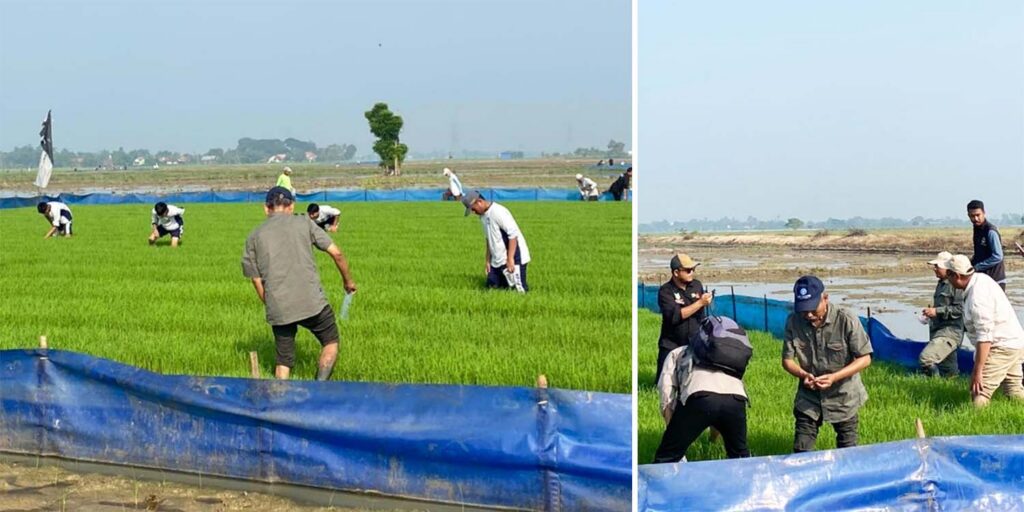
The activity was carried out simultaneously in 10 provinces and involved nearly 250 regencies across Indonesia as a concrete effort to suppress pest attacks early through an applied, environmentally friendly technological approach.
In Karawang Regency, West Java, the activity was attended by more than 150 participants from various sectors, including the Director of Food Crop Protection, the Director of the Karawang Regency Agriculture Office, members of the Karawang Regional House of Representatives (DPRD), representatives from the West Java Provincial Agriculture Office, agricultural extension workers, Plant Pest Organism Controllers (POPT), farmers from Sekarwangi Village, as well as students from SMAN 1 Rawamerta.
The activity was conducted in a hybrid format. The series of events included the joint collection of stem borer egg masses by farmers and students in Karawang, live broadcasts of similar activities from other regions across Indonesia, and interactive discussions with farmers regarding effective and sustainable pest control strategies.
Meanwhile, the Dean of the Faculty of Agriculture at IPB University emphasized the importance of intervention during the early stages of plant growth. According to him, collecting egg masses during the nursery stage is an efficient strategy, as it is carried out within a relatively limited area but has a significant impact in breaking the pest life cycle before the population increases.
“IPB supports the implementation of environmentally friendly technologies such as the collection of these egg masses,” he emphasized.
This movement not only serves as a technical measure for pest control but also as a momentum to strengthen collaboration among the government, academics, and farmers. Through a simple yet impactful preventive approach, this initiative is expected to maintain agricultural productivity while promoting more sustainable farming practices.
Through this initiative, the Ministry of Agriculture and IPB University once again reaffirm their commitment to delivering agricultural innovations that are applicable, efficient, and environmentally sustainable in support of national food security. (*/Rz) (IAAS/ADF)
