

Professor of the Faculty of Fisheries and Marine Science (FPIK) of IPB University, Prof Dietriech Geoffrey Bengen, DEA, responded to the statement of the Minister of Maritime Affairs and Fisheries (KKP) Sakti Wahyu Trenggono that fish in Cirata Reservoir are not suitable for consumption due to mercury content.
He emphasized that the statement was based on scientific studies and reflected the complexity of pollution in the Citarum watershed.
“Cirata Reservoir is the downstream part of the Citarum River that is polluted by industrial, domestic, and agricultural waste,” explained Prof Dietriech, a lecturer at the Department of Marine Science and Technology, FPIK IPB University.
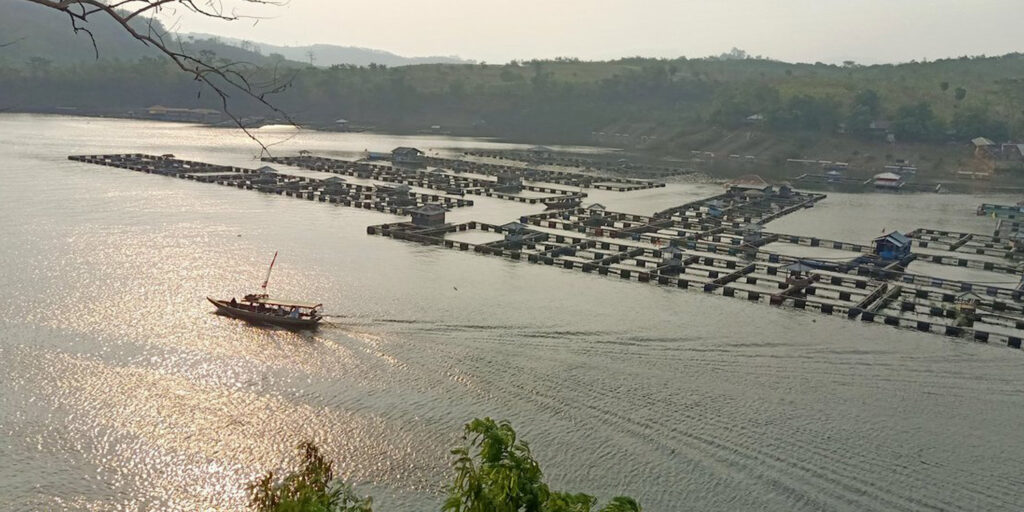
In addition, he continued, the density of floating net cages (KJA) that reached 120.000 units – far exceeding the ideal carrying capacity of 12.000 units – exacerbated the pollution condition.
He explained that mercury can enter waters through various pathways, such as industrial waste (including from small-scale gold mining), domestic waste (such as broken batteries), and agricultural residues.
In the aquatic environment, mercury will turn into methylmercury – the most toxic form – which easily accumulates in the food chain, especially in fish. “The process of bioaccumulation and biomagnification makes predatory or long-lived fish have higher mercury levels,” he explained.
Regarding the health impacts, Prof Dietriech highlighted the characteristics of mercury, which is known as a strong neurotoxin. It can damage the central nervous system, cause headaches, tremors, visual disturbances, kidney damage, immune disorders, and gastrointestinal inflammation. “This threat is very serious if contaminated fish are consumed regularly in large quantities,” he said.
He also reminded that the density of KJA exacerbates the formation of methylmercury because the remaining feed and fish feces create anoxic conditions at the bottom of the reservoir. “That accelerates the process of methylmercury formation which is much more toxic,” he added.
To overcome these problems, Prof Dietriech encourages a multidimensional approach. He suggested five strategies that need to be done, namely:
- Transparent risk communication
According to him, the government needs to convey data on mercury levels openly and educate alternative sources of protein. “If research shows levels exceed the threshold, declare it unfit for consumption temporarily accompanied by a ban on sales,” he said.
- Monitoring public health
An equally important step is to monitor the health conditions of residents, especially for vulnerable groups such as pregnant women and children.
- Addressing the root of pollution
Prof Dietriech emphasized the need to address the source of the problem, including law enforcement against polluting industries and illegal gold mining in the upper reaches of the Citarum, as well as a drastic reduction in the number of KJAs. “Drastic reduction of KJAs that exceed the carrying capacity is crucial to reduce the organic load,” he emphasized.
- Socio-economic support
The government must also pay attention to the socio-economic aspects of affected communities through fair compensation for affected farmers, facilitation of relocation or profession change, and development of a sustainable tourism sector.
- Reservoir ecosystem revitalization
For the long term, efforts to restore the reservoir ecosystem are needed, which include law enforcement based on incentives and disincentives, setting KJA quotas according to scientific studies, and research on waste treatment technologies such as phytoremediation and biotechnology.
Prof Dietriech concluded with an important message, “The government must involve farmers in decision-making and allocate special research funds for mercury mitigation.” He hopes that this effort can restore the ecological function of Cirata Reservoir and ensure the socio-economic sustainability of the surrounding community. (Fj) (IAAS/NVA)
