

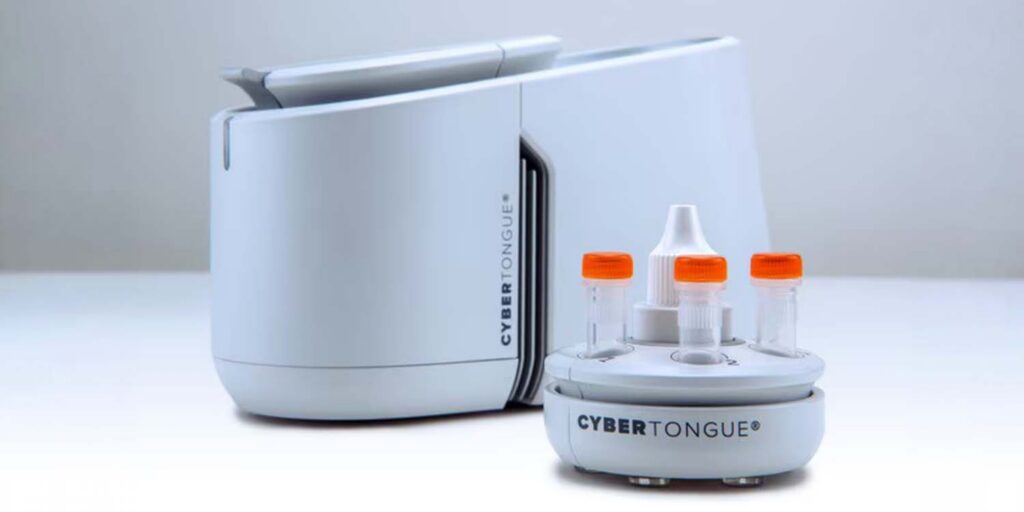
The national dairy industry still faces various challenges in maintaining product quality. This is primarily because most of the production comes from small scale farms.
These challenges include the mixing of illegal ingredients, maintaining the cold chain, and ensuring the hygiene of the production process. Currently, local milk can only meet 20 percent of the industry’s needs, while the remaining 80 percent comes from imports. Amid these conditions, the Cyber Tongue biosensor technology from Australia is seen as a potential solution to these problems.
According to Prof Ronny Rachman Noor, an expert in ecological genetics at IPB University, the Cyber Tongue biosensor technology developed by Australian researchers could be a solution to milk quality issues. This innovation is capable of quickly and accurately detecting enzymes that degrade milk.
“Cyber Tongue has the potential to save the dairy industry. This innovation helps reduce waste from milk that doesn’t meet standards because it can quickly detect contaminants. So, Cyber Tongue could be the solution to improve the quality of local milk, reduce waste, and strengthen the competitiveness of milk in the market, especially against imported milk,” he explained.
Its advantages over conventional methods include speed, high accuracy, and the ability to be used directly at the production site. “In short, Cyber Tongue is like an electronic tongue that ‘tastes’ the quality of milk directly, enabling the industry to make the right decisions before milk is discarded,” explained Prof Ronny.
Cyber Tongue
This technology was developed by PPB Technology in Canberra, based on research by the Commonwealth Scientific and Industrial Research Organization (CSIRO). Prof Ronny said that, fundamentally, this technology uses a protein based biosensor that operates on the principle of bioluminescence resonance energy transfer (BRET). This innovation enables the detection of the protease enzyme (AprX), which causes milk to spoil rapidly, as well as other contaminants in dairy products.
“The way Cyber Tongue works is very interesting because it combines biotechnology with optical sensors to quickly detect contaminants in milk. Milk quality can be checked in just three minutes, much faster than laboratory methods, which take 2–3 days,” said Prof Ronny.
This rapid detection, he said, allows milk with high protease levels to be processed into cheese or yogurt rather than being discarded, making it more cost effective and environmentally friendly.
“In the dairy industry, samples are taken directly at the factory and rapidly tested with Cyber Tongue for instant results. If protease levels are high, the milk is diverted to fermented products. If they’re low, it’s safe for UHT processing or long-term distribution,” he added.
Saving 70 Metric Tons of Milk
The Food and Agriculture Organization (FAO) estimates that global milk production will reach 979 million metric tons by 2024. A study by NIZO, an independent Dutch dairy and food research institute, shows that up to one-sixth of that milk is wasted or more than 150 million metric tons.
In addition to providing rapid analysis, Cyber Tongue also enables on-site testing. This technology can detect various contaminants such as proteases, lactose, allergens, and toxins. Based on estimates by its development team, all of Cyber Tongue’s capabilities could prevent more than 70 million metric tons of milk from being wasted each year.
“This innovation brings new enthusiasm and hope to the dairy industry, has the potential to become a global testing standard, and supports food sustainability by reducing milk waste,” concluded Prof Ronny. (IAAS/LAN)
