

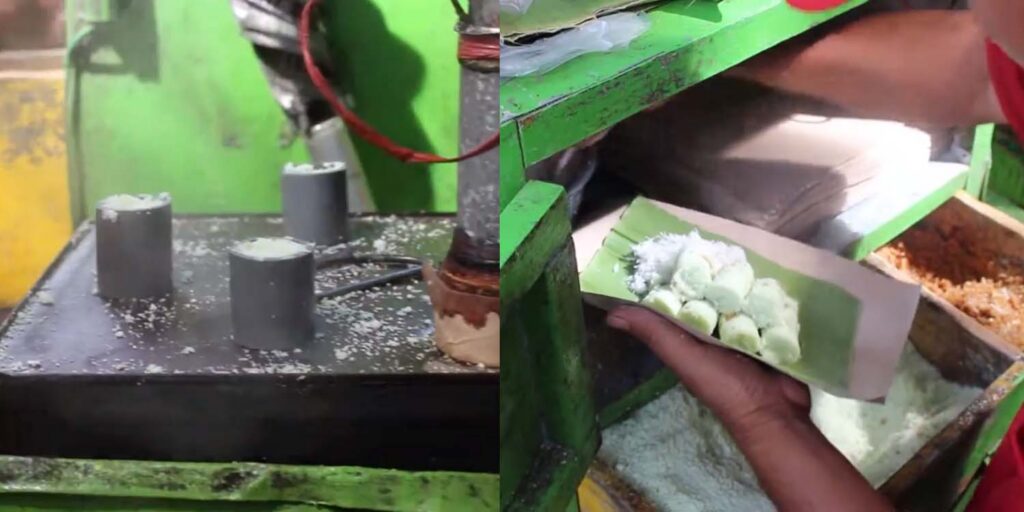
The distinctive sound of traditional putu cake vendors has long evoked both appetite and nostalgia. However, many vendors today have been found using polyvinyl chloride (PVC) pipes as molds during the preparation process.
Responding to this phenomenon, Prof Eko Hari Purnomo, an expert from the Faculty of Engineering and Technology at IPB University, emphasized that PVC pipes should not be used for molding and steaming putu cakes. He noted that the shift from bamboo tubes to PVC pipes is highly concerning, as it may cause toxic plastic components to migrate into the food.
“PVC pipes were originally developed for transporting materials under cold conditions. In particular, unplasticized PVC can only be used at temperatures below 50 degrees Celsius, meaning it was never designed for high temperature applications,” he explained.
Prof Eko further explained that putu cakes are steamed using water vapor at 100 degrees Celsius to allow gelatinization of rice starch, the main ingredient, which occurs at around 80 degrees Celsius.
“These temperatures can cause plastic components from the PVC pipes to migrate into the putu cakes. PVC pipes are generally made from PVC plastic, particularly unplasticized PVC, which is only suitable for use at temperatures below 50 degrees Celsius,” he said when responding to questions from the IPB Today team.
Such high temperatures can trigger the migration of additives, including stabilizers containing lead (Pb), which may cause kidney disorders. In addition, there is a possibility of migration of PVC-forming monomers that are carcinogenic or cancer causing.
According to hi,, traditional bamboo molds and steamers remain a safer and more environmentally friendly alternative, provided they are properly cleaned. Their use also helps preserve the cultural value of traditional culinary practices.“Even if plastic molds are used, only materials specifically designed to be food safe at high temperatures should be selected,” he added.
Prof Eko also stressed the importance of shared responsibility in educating the public. “Food safety is the responsibility of the government, producers, and consumers. In terms of food safety, regulatory authorities such as the National Agency of Drug and Food Control (BPOM), local governments, and universities can play an active role in educating the public,” he concluded. (dh)(IAAS/PRP)
