

Protecting the ocean can actually start with simple habits. Instead of just bringing home their catch, fishermen are now getting into the habit of bringing home trash from the ocean.
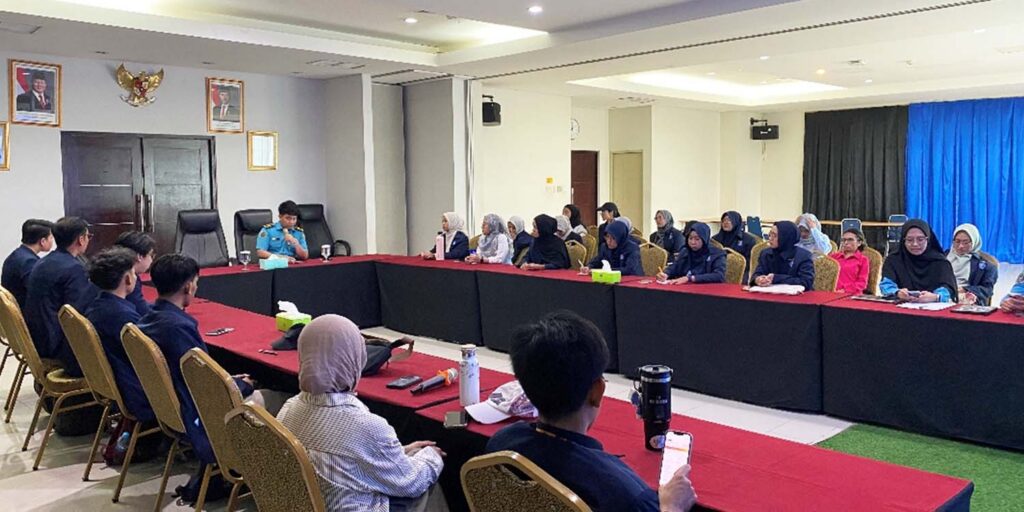
This was a finding by Graduate Students from IPB University, members of the Bogor Science Club, during a field observation at the Nizam Zachman Ocean Fisheries Port (PPS) in Jakarta. The Month of Love for the Sea (BCL) program, initiated by the Ministry of Marine Affairs and Fisheries, is seen as not only encouraging compliance but also beginning to shape changes in fishermen’s behavior.
“Interestingly, fishermen are starting to get used to bringing back trash without always needing to be reminded. This indicates a shift in behavior as new habits form,” said Feldy Khalid, a student representative.
Fishermen’s activities at the Nizam Zachman PPS proceed almost nonstop. Boats come and go in succession, bringing in their catches and creating a dynamic pulse of life in the port area. Over the past three years, fishery production has increased significantly, from around 135 thousand tons in 2022 to more than 282 thousand tons in 2025. The catch is dominated by skipjack, bigeye tuna, and yellowfin tuna.
Approximately 62 percent of the catch is exported to Thailand, Vietnam, China, the United States, and Japan, contributing Rp23,6 trillion in non tax state revenue (PNBP). This figure underscores the strategic role of the Nizam Zachman Fishing Port (PPS Nizam Zachman) in the national economy.
However, this high level of activity is also accompanied by environmental issues, namely an increase in waste that impacts environmental quality. To address this challenge, the Ministry of Marine Affairs and Fisheries (KKP) launched the BCL program, involving fishermen as part of the solution.
Fishermen are encouraged not only to catch fish but also to collect trash while at sea. This approach adapts the practices of mountain climbers in collectively preserving nature within forest areas.
The BCL program began at the Nizam Zachman Fishing Port in January 2024. Data shows that the amount of waste collected fluctuates, with 8.163 kg in 2024 and approximately 6.100 kg in 2025. Entering 2026, the trend rose significantly again in the first three months, influenced by the increased number of vessels during the Eid al-Fitr period.
This program also includes a monitoring mechanism. Vessels that do not bring in their trash will be flagged as non compliant on their vessel arrival report (STBLKK). This approach is effective in promoting short-term compliance, though it has limitations in fostering long term awareness.
“A combination of regulations and direct engagement is key to the program’s success. Effective sanctions drive initial change, while hands on experience reinforces the formation of habits,” said Feldy Khalid.
Moving forward, this program can be strengthened by providing recognition or incentives to fishermen who consistently collect marine debris. Additionally, empowering fishermen’s roles can be integrated into a community based marine monitoring system.
Feldy concluded, “From the Nizam Zachman Postgraduate Program, it is evident that protecting the ocean does not always begin with major policies. Change can actually grow from simple habits practiced consistently, when fishermen not only bring home their catch but also bring home a sense of responsibility toward the ocean.” (*/Rz) (IAAS/EPK)
