

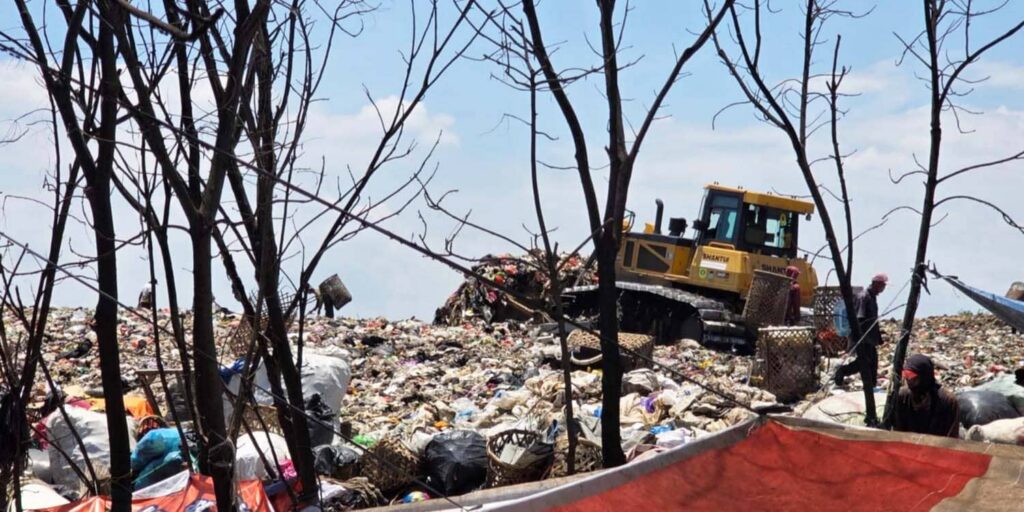
Plans to build a waste to energy power plant at the Galuga Final Waste Treatment and Processing Facility (TPPAS) in Bogor Regency have received a positive response from various parties, including the academic community.
IPB University Professor and Chairman of the Environmental Engineering Division, Prof Arief Sabdo Yuwono, believes that converting waste into energy can serve as a strategic solution to reduce waste accumulation while simultaneously generating new and renewable energy.
He noted that the conversion of waste into electricity has been implemented in several regions across Indonesia, including at the Benowo Landfill in Surabaya, East Java, which can serve as a reference for developing similar projects in other areas.
“At the Benowo Landfill in Surabaya, the waste feedstock, which amounts to 1.600 to 1.800 tons per day, can generate 12 megawatts of electricity, or 12 million watts. If the average daily waste intake is just 1700 tons, the efficiency is approximately 7 watts per kilogram,” he said.
According to him, if the technology used in the project in Bogor is more advanced than that used in Surabaya, then this experience can serve as an initial reference for other cities in developing waste to energy processing.
He also emphasized that the success of converting waste into electricity heavily depends on proper waste sorting from the source, particularly at the household level.
“As long as waste sorting is supported by the community at the source, such as educational institutions, offices, hospitals, and restaurants, electricity generation will be more effective and efficient. Sorting waste at the source is a key factor,” he explained.
Regulations regarding household waste management are actually outlined in Law No 18 of 2008, which emphasizes the importance of waste management starting at the household level. However, according to him, implementation on the ground is still far from expectations.
Additionally, there are other challenges in developing Waste to Energy Power Plants (PLTSa) in Indonesia, namely the characteristics of waste influenced by tropical climatic conditions with high rainfall.
“There is a study estimating the average annual rainfall, particularly in Bogor, to be around 3.900 to 4.000 millimeters. This results in high moisture content in the waste, which can reduce the efficiency of the electricity generated,” he concluded.
Meanwhile, the Galuga TPPAS in Cibungbulang Subdistrict, Bogor Regency, which is planned to be the site of the WPP project, has a capacity of approximately 1.500 tons of waste per day, consisting of about 500 tons from the City of Bogor and 1.000 tons from Bogor Regency. (dh) (IAAS/DAM)
