

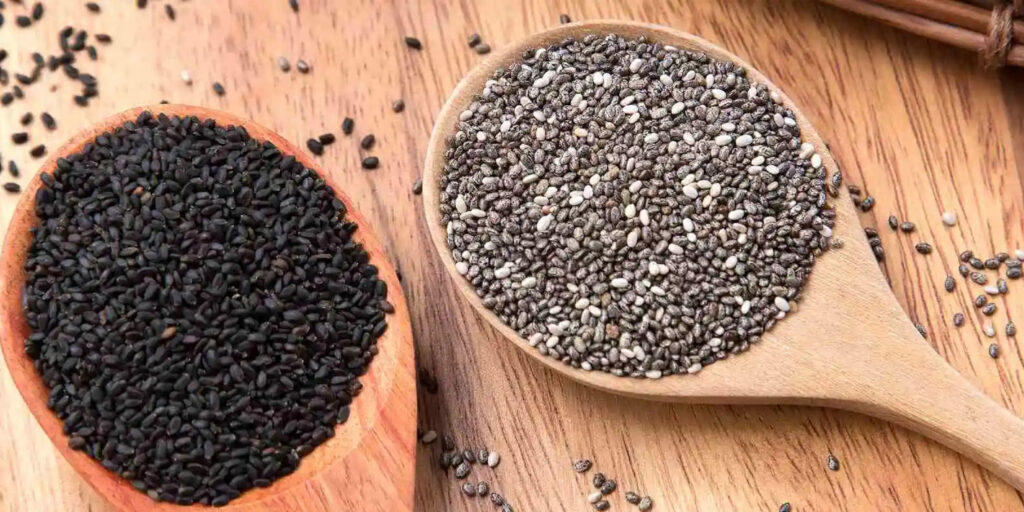
Professor of Food Science and Technology at IPB University, Prof Dede R Adawiyah, stated that chia seeds (Salvia hispanica) and basil seeds (Ocimum basilicum) have very high nutritional content, making them eligible to be categorized as superfoods.
“Chia seeds have long been claimed as superfoods. However, our research findings prove that indigenous Indonesian basil seeds are also worthy of being categorized as superfoods,” explained Prof Dede.
Although they belong to the same family, Lamiaceae, the two seeds have different geographical origins. Chia originates from Central America, specifically Mexico and Guatemala, while basil originates from Asia, including Indonesia.
“Both have a similar shape and the ability to form gum when hydrated or soaked in water,” she explained.
In terms of nutritional content, sesame seeds have higher protein (26,05%) and carbohydrate (42,47%) levels than chia seeds, which are 20,89% and 36,81%, respectively. Conversely, chia seeds have a higher fat content, reaching 37,61%, while sesame seeds have 26,03%.
Furthermore, Prof Dede revealed that the oil from both seeds is dominated by polyunsaturated fatty acids (PUFAs) with very high percentages of 89,21% in chia and 87,14% in sesame.
These contents include essential fatty acids such as omega-3, omega-6, and omega-9. “Essential fatty acids cannot be produced by the body and must be obtained from food. This is why consuming chia and sesame seeds is highly beneficial,” explained Prof Dede.
Another advantage is that research shows chia seeds have the potential to be a prebiotic source, while sesame seeds are rich in dietary fiber. Both also have natural antioxidant activity that can support the immune system.
For consumption, Prof Dede recommends soaking chia and sesame seeds first in a 1:30 ratio (weight/volume).
“For example, one tablespoon of chia seeds or basil seeds should be soaked in a glass of water or 200 ml for one to a maximum of two hours before consumption,” she said. The hydrated seeds can be drunk directly or mixed with honey, orange juice, or fruit juice.
In everyday practice, chia seeds and flaxseeds are often used as ingredients in both traditional and modern beverages, such as es kuwut, es teler, cincau drinks, or yogurt mixtures. Adding them to yogurt is believed to enhance the functional properties and health benefits of the product. (dr) (IAAS/NRA)
