

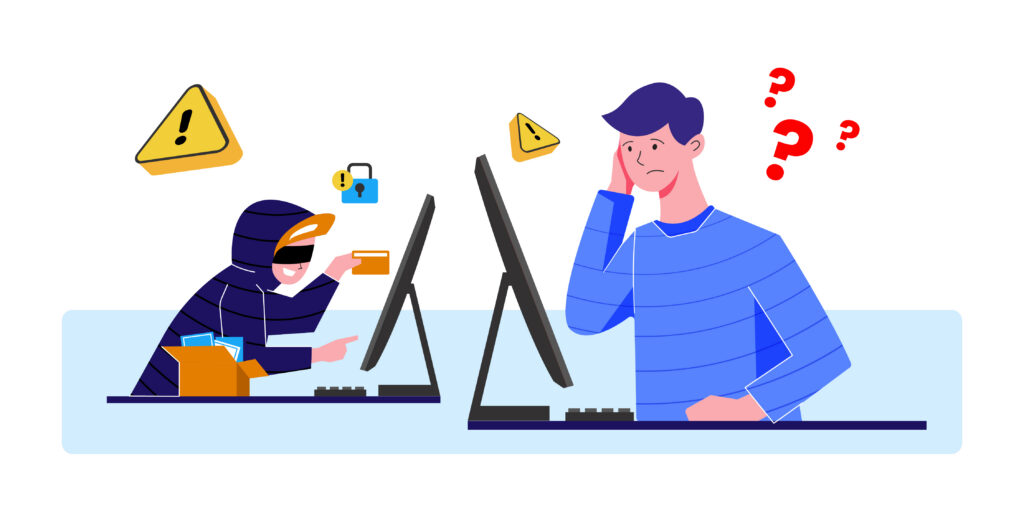
The rise of online scams, positioning Indonesia as a primary target for digital crime, cannot be viewed merely as a matter of individual negligence. Instead, this phenomenon reflects social vulnerabilities amidst the acceleration of digital transformation.
Sociologist and Chief of Research Center for Agricultural and Villages Development (PSP3) at IPB University, Dr Ivanovich Agusta, assesses that the increase in digital scams is a structural symptom within a society undergoing rapid transition.
“Scam victims are not ‘ignorant’ parties. This is a symptom of social vulnerability where society is moving rapidly into the digital world without being accompanied by adequate protective norms,” he stated.
He explained that society is currently in a state of anomie, which is a condition where changes occur rapidly while social norms have not yet been established.
“Interactions have now shifted to private and encrypted digital spaces, causing traditional social controls, such as family and the local environment, to weaken. Social relations have become impersonal and are filled with false symbols of authority, ranging from bank logos to fraudulent institutional accounts,” Dr Ivanovich elaborated.
Data from the Indonesia Anti-Scam Centre (IASC) as of February 2026 indicates the massive scale of the problem, with hundreds of thousands of scam reports and hundreds of thousands of accounts indicated as illegal. According to Dr Ivanovich, this condition reflects information asymmetry: perpetrators possess sophisticated manipulation techniques, while the public often makes decisions in fast paced and limited situations.
In recent months, scam modes have increasingly targeted the social needs of the community, ranging from instant loans, assistance for Micro, Small, and Medium Enterprises (MSMEs), and job vacancies to fraudulent public services. “Scams work by reading the anxieties and needs of citizens. This is social exploitation, not just ordinary crime,” he emphasized.
Four Factors
Dr Ivanovich identified four main factors causing vulnerability. First, cultural lag, where technological developments are not balanced by the readiness of digital mindsets and ethics. Second, homophily, the tendency of people to trust groups with similar views, which is exploited by perpetrators to infiltrate. Third, the weakening of solidarity in anonymous and transactional digital spaces. Fourth, the strength of symbolic authority of formal institutions, which is easily misappropriated.
On the other hand, the digital literacy of the public is not yet fully mature. The ability to use technology has not been accompanied by the skill to assess risks and perform verification. A culture of being quick to trust, reluctant to confirm, and hasty in sharing information widens the loophole for scams.
Economic pressure further reinforces vulnerability. Promises of aid, jobs, or “quick money” become increasingly tempting amidst unstable economic conditions. Furthermore, scams have now evolved into organized cross-border networks.
Social Resilience: The Key
To address this, he emphasized the importance of building digital social resilience. “The key is simple: delay the response, verify with official sources, and discuss before acting,” he said.
Furthermore, he asserted that protection cannot be solely burdened onto the individual. The state needs to strengthen the digital protection ecosystem through community
based education, rapid complaint responses, and personal data protection.
“This is not just a matter of vigilance, but how to build social verification capacity within society,” he concluded. (IAAS/HNF)
