

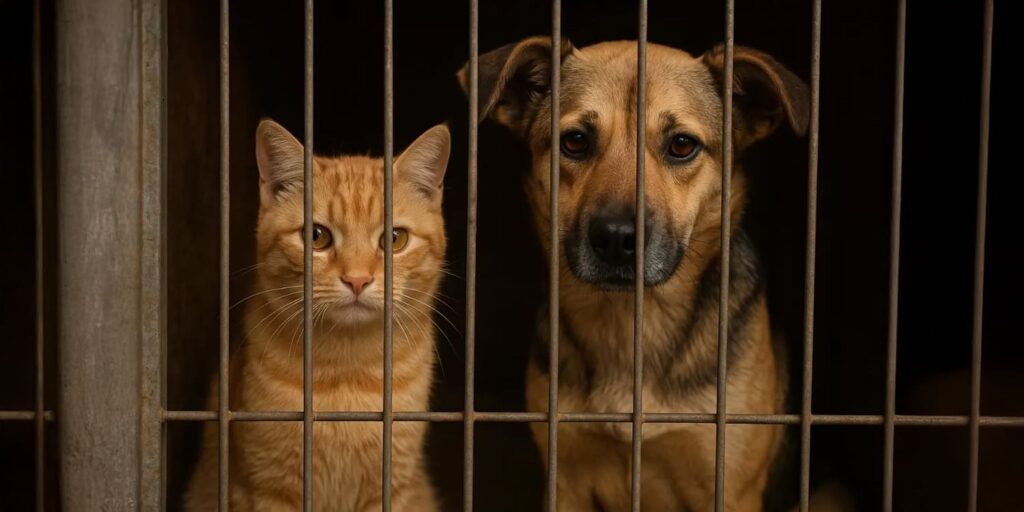
Concerns about the impact of the trade, distribution, and consumption of dog and cat meat on human health have led to bans and regulations in various regions. This is similar to the recent efforts of the Jakarta Provincial Government to ban the trade of dog and cat meat to prevent rabies and protect public health.
The Jakarta Provincial Government’s plan to ban the trade and consumption of dog and cat meat, although late, is considered a step forward. It is hoped that this step will lead to a total ban on consumption and trade in Indonesia.
A Long History
The consumption of dog and cat meat has been practiced for thousands of years as part of tradition. For example, in some parts of Asia, dogs have historically been consumed because they are considered to have medicinal benefits or as part of seasonal rituals. Compared to dog meat, the consumption of cat meat is less common, but it is still practiced in certain regions and communities.
When viewed from a timeline, the consumption of dog and cat meat has indeed been deeply rooted for a long time as part of the culture in communities in various countries. However, over time, there has been increasing opposition because, from the perspective of shifting ethics, health, and culture, it is considered controversial, and therefore its consumption has declined.
China and Vietnam have a long history of consuming dog meat, which is related to festivals or traditional beliefs. For example, the Yulin Dog Meat Festival in China began in 2000, based on an old tradition rooted in the Bamboo Curtain country.
Another country that also practices eating dog meat is South Korea. Dog meat (note: called bosintang) is traditionally consumed during the summer to increase stamina. However, its popularity has declined sharply, especially among young people. Therefore, it is predicted that within the next 10–15 years, this tradition will disappear on its own because there is no next generation to carry it on.
In some parts of Africa, dog meat is also commonly consumed as part of local customs and for economic reasons. In contrast, the consumption of dog and cat meat is rare in Europe and America. Even if it is recorded in history, most cases are associated with conditions of war or famine.
In America, the legal status of consuming dog meat is categorized as a legal act, meaning that it is not explicitly prohibited, but its transportation and sale are prohibited. In this country, the applicable rules have exceptions for Native American ceremonies.
Scale of Consumption
Based on various available records, it is estimated that currently around 30 million dogs and millions of cats are slaughtered each year for their meat worldwide. However, over time, this number is expected to decline due to growing public opposition, especially in Asia.
For example, in South Korea, the younger generation is increasingly rejecting dog meat, and the government is considering a complete ban. In Indonesia, activists and members of the DKI Jakarta Regional Representative Council (DPRD) are pushing for a ban on the consumption and trade of dog and cat meat. Recently, the DKI Jakarta DPRD also supported the governor’s regulation to ban the distribution of dog and cat meat.
Is it Really More Nutritious?
In terms of nutritional value, there is no evidence that dog meat and cat meat are more nutritious than beef. Beef is even nutritionally superior to dog and cat meat in terms of protein quality, fat composition, and micronutrient density. While dog and cat meat are comparable in basic macronutrients, there is less documented information due to ethical controversies.
In terms of fat content, beef contains less fat than dog meat. Therefore, beef is healthier than dog meat. In addition, in terms of iron, vitamin B, and omega-3 content, beef is also superior to dog and cat meat. Beef also has higher digestibility than both of them.
Health Issues
From a health perspective, the distribution and consumption of dog and cat meat poses a high risk for the spread of zoonotic diseases such as rabies. Various studies show that animal markets are linked to the spread of various other diseases, including COVID-19.
Rabies, commonly known as mad dog disease, has frequently broken out in various regions of Indonesia and claimed many lives. Rabies is a disease caused by viruses transmitted through bites or contact with infected animals. The trade in live dogs and cats and their meat plays a major role in increasing the risk of spreading rabies.
In addition to rabies, improper handling of dog and cat meat increases the incidence of bacterial infections such as Salmonella and E. coli, as well as other parasitic infections that can also spread.
The existence of informal or illegal animal markets, which usually have inadequate hygiene and sanitation and escape veterinary supervision, also plays a role in increasing the risk of spreading zoonoses.
Live animal markets that sell dogs and cats alongside other species also create an environment conducive to the emergence of new zoonotic pathogens, similar to outbreaks such as COVID-19.
The economic impact of disease outbreaks caused by dogs and cats, such as rabies, cannot be ignored as it threatens people’s livelihoods.
A Breath of Fresh Air
Various countries in Asia, such as Taiwan, Hong Kong, Thailand, and India, which previously had a tradition of consuming dog and cat meat, have now imposed a total ban. Meanwhile, in China, Vietnam, several countries in Africa, and parts of Indonesia, the practice of trading dog and cat meat still continues, albeit under increasingly strict supervision.
This change in perspective regarding the consumption of dog and cat meat is certainly inseparable from the notion that these two animals are now considered companion animals or friends and not livestock for consumption. Various traditions that previously practiced the consumption of dog and cat meat have gradually begun to abandon this habit.
In addition to this shift in perspective, various campaigns carried out by animal welfare activists and education programs related to the ethical, negative, and cultural aspects of dog and cat meat have increased in various countries, including Indonesia.
In Indonesia, campaigns such as Dog Meat Free Indonesia (DMFI) and other international non-profit organizations are actively carried out. These steps aim to raise awareness and urge the government to take action to ban the distribution and consumption of dog and cat meat.
On the other hand, the ban on the trade of dog and cat meat in Indonesia, which often involves theft and the involvement of pets and wild animals, will certainly have an impact on the livelihoods of some people. However, given that the scale is not massive, the government can find solutions for those affected to switch to other, more common livelihoods.
The fresh breeze that began with the ban on the distribution and consumption of dog and cat meat in the DKI Jakarta area is expected to be followed by regulations at the national level.
Culture and traditions, which are the heritage of our ancestors and an integral part of a community’s identity, should certainly be preserved and passed down. However, the circulation and trade of dog and cat meat should be immediately halted, as the negative effects far outweigh the positive ones. (IAAS/LAN)
