

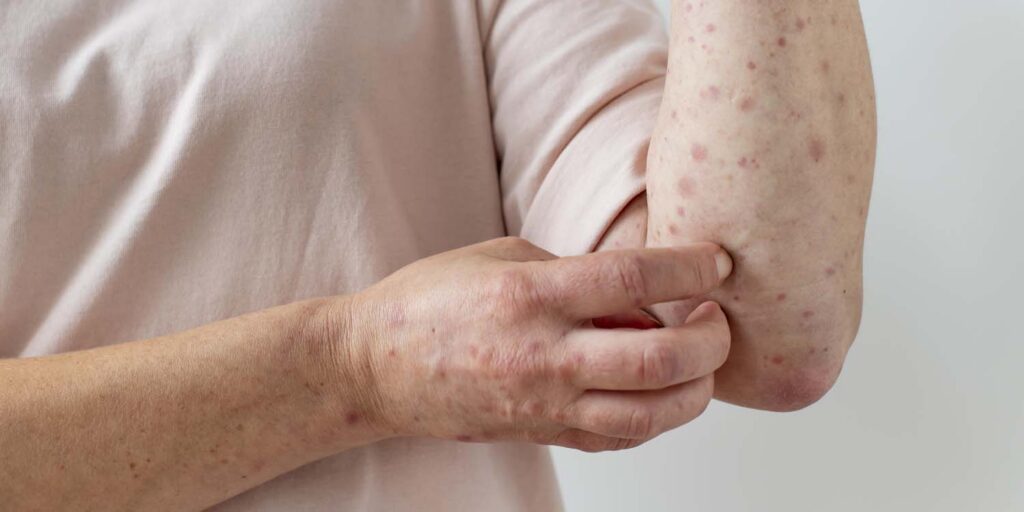
The recent spike in measles cases is seen by IPB University Faculty of Medicine and Nutrition (FKGiz) lecturer dr Aisyah Amanda Hanif as an indicator of declining herd immunity.
“An increase in measles cases often indicates that population immunity is declining. Measles is a highly contagious disease. One infected person can transmit the virus to 12 to 18 susceptible individuals around them,” she explained.
Based on studies, around 90 percent of people who do not have immunity to the measles virus are potentially infected if exposed. Therefore, the level of immunization coverage is crucial in preventing the spread of this disease.
She added that herd immunity will be achieved if more than 94 percent of the population has immunity to measles, either through vaccination or previous infection. Meanwhile, the measles immunization coverage target set by the Ministry of Health is a minimum of 95 percent.
“If immunization coverage declines, the number of vulnerable individuals will increase. When the virus enters a community with many people who do not yet have immunity, an outbreak can occur more easily,” she said.
Furthermore, dr Aisyah emphasized that measles cannot be considered a mild illness or simply a skin rash. The measles virus spreads through the air (airborne) and generally enters the body through the respiratory tract.
“Once inside the body, the virus multiplies and spreads to various organs. It is the body’s immune response to this infection that causes the characteristic rash in measles patients,” she explained.
Under certain conditions, this disease can cause serious complications, especially in vulnerable groups such as infants, malnourished children, or individuals with low immune systems. Complications that can occur include pneumonia and encephalitis.
“Measles infection can also weaken the immune system, making patients more susceptible to secondary bacterial infections. This condition can worsen the situation and increase the risk of death,” she added.
In terms of prevention, vaccination is the most effective protective measure. The measles vaccine uses a live attenuated virus, which trains the body’s immune system to recognize the virus without causing disease.
“After the vaccine is administered, the body will form specific antibodies and long term immune memory. If exposed to the measles virus at some point, the immune system can respond quickly and neutralize the virus before it causes disease,” she said.
Scientifically, the measles vaccine has been proven to be more than 95 percent effective after two doses and has been used globally for decades with a good safety profile.
For children who have not yet been immunized or are late for immunization, Dr Aisyah emphasized that the vaccine can still be given through a catch up vaccination program. According to her, this step is very important because unvaccinated children are the most vulnerable to infection.
She also urged the public to ensure children receive complete measles immunization, immediately undergo catch-up immunization if delayed, recognize early symptoms of measles, and isolate suspected patients to prevent transmission to others.
“Measles is a preventable disease through vaccination. With high immunization coverage and good public awareness, the spread of measles can be prevented,” she concluded. (*/Rz) (IAAS/FHD)
