

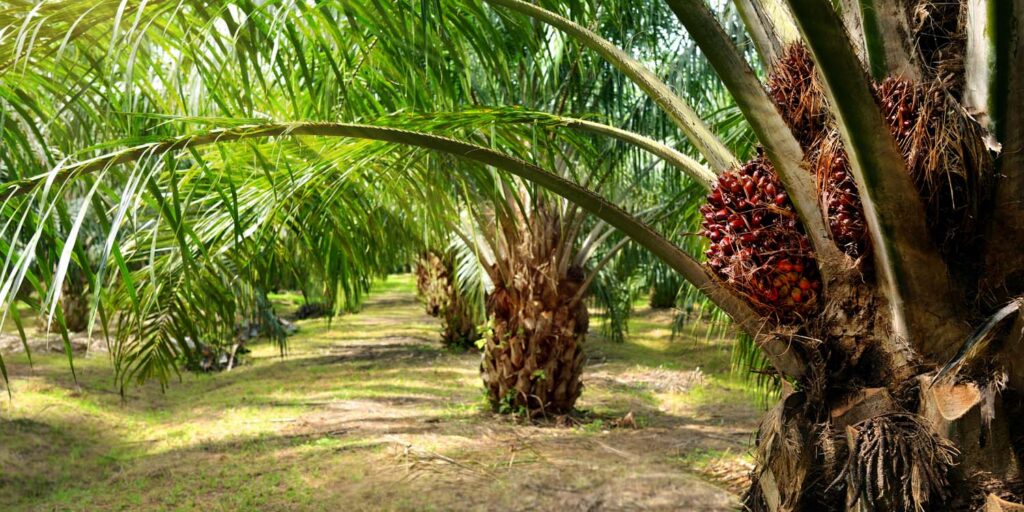
Prof Hariyadi, a professor at the Faculty of Agriculture, IPB University, emphasized the importance of the “New Nexus” approach in sustainable oil palm management. He highlighted the need to prioritize land intensification over land expansion to boost the productivity of the national plantation sector.
He conveyed this during the IPB University Professorial Inaugural Lecture, held on Saturday (6/27).
“Currently, smallholder plantation productivity remains below 60 percent of its potential. Land expansion or extensification is not the right approach if it is not accompanied by adequate inputs such as fertilizer and high quality seeds,” he said.
Therefore, Prof Hariyadi emphasized, “The key lies in high quality seeds and appropriate fertilizer inputs. I strongly advocate for intensification to optimize existing potential.”
According to him, the implementation of good agricultural practices (GAP) is the main key, particularly through the “5 Rights” principle in fertilization: the right type, dose, location, timing, and method of application.
Regarding the circular economy, Prof Hariyadi explained that palm oil waste such as fronds, empty fruit bunches (EFB), shells, fiber, and palm oil mill effluent (POME) holds great potential for economic value-add, ranging from renewable energy sources to animal feed and organic fertilizer.
However, he acknowledged a number of challenges in implementing the circular economy in the palm oil industry. Some of these include high initial investment costs, technological limitations, logistical barriers, an underdeveloped market for derivative products, as well as regulatory issues and capacity constraints among smallholders.
Concluding his remarks, Prof Hariyadi emphasized that the “New Nexus” framework must integrate various aspects—ranging from productivity, climate resilience, the circular economy, to digitalization—to address global challenges such as carbon emissions, climate change, and environmental, social, and governance (ESG) standards. (IAAS/KQA)
