

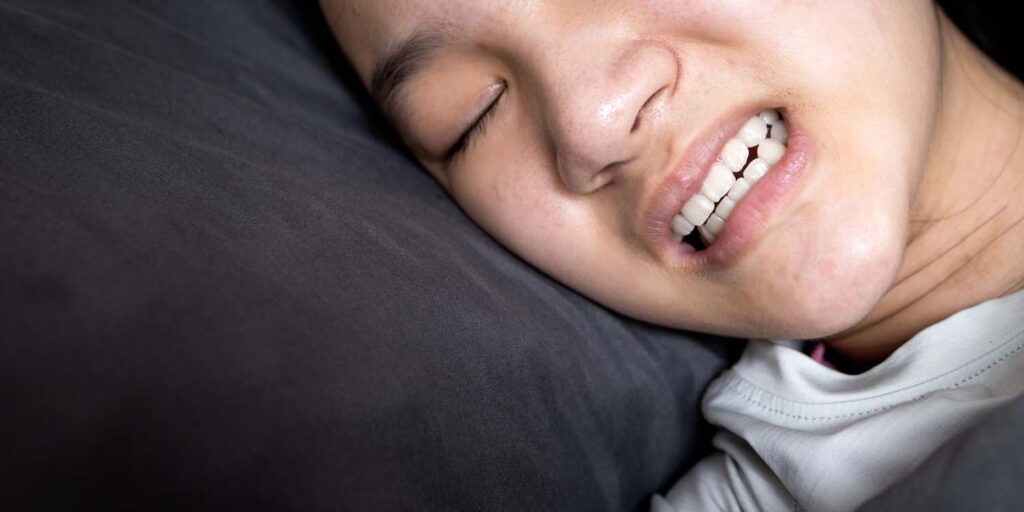
Bruxism or the habit of grinding one’s teeth while sleeping, is not merely a dental issue but also involves complex mechanisms in the brain and nervous system.
dr Yeni Quinta Mondiani, SpN, a lecturer at the Faculty of Medicine and Nutrition at IPB University, explains that this condition is a sleep disorder that requires serious attention if it persists.
According to her, bruxism is a repetitive movement of the lower jaw that occurs during sleep, with a prevalence that is relatively similar between men and women. However, she notes that this condition is more commonly found in children aged 3 to 12 years.
“Sleep bruxism is characterized by repetitive chewing movements that cause friction between the teeth. The resulting sounds are often quite disruptive and can impact both dental health and the jaw joints,” explained dr Yeni.
Neurologically, this condition arises from increased activity in the masticatory muscles, such as the masseter, temporalis, and pterygoid muscles. This activity is triggered by a disturbance in movement control within the nervous system, particularly involving the dopaminergic system.
“Muscle contractions become more frequent and stronger than under normal conditions. This indicates the involvement of the central nervous system in regulating these movements,” she added.
Stress and Anxiety Factors
Furthermore, dr Yeni emphasized that psychological factors such as stress and anxiety play a major role in triggering bruxism. According to a meta-analysis, the higher a person’s stress levels, the greater the risk of developing this habit.
“Stress management is crucial, not only for mental health but also for maintaining sleep quality as well as dental and jaw health,” she said.
In the classification of sleep disorders, bruxism falls under parasomnia, a condition characterized by unwanted behaviors or movements during sleep. Bruxism is also frequently associated with other conditions such as obstructive sleep apnea, pain, or sleep related movement disorders.
“There are various factors that can trigger this condition, ranging from genetic predisposition, sleep deprivation, the use of certain medications, to circadian rhythm disorders,” explained dr Yeni.
She also emphasized that bruxism should not be taken lightly. Medical intervention is necessary if symptoms such as jaw pain, cracked teeth, tooth sensitivity, or chewing difficulties arise.
“If accompanied by sleep disturbances, recurring headaches, or suspected to be related to neurological disorders, further examination by a specialist is necessary,” she emphasized.
In terms of treatment, a comprehensive therapeutic approach is taken based on the underlying cause. Some steps that can be taken include improving sleep quality, managing stress, and using a mouthguard to prevent further damage.
“In certain cases, a doctor may prescribe muscle relaxants before bedtime to help reduce jaw muscle contractions,” concluded dr Yeni.
With proper understanding and appropriate management, bruxism can be controlled so that it does not lead to long-term complications, whether in dental health or the nervous system. (AS)(IAAS/KDP)
