

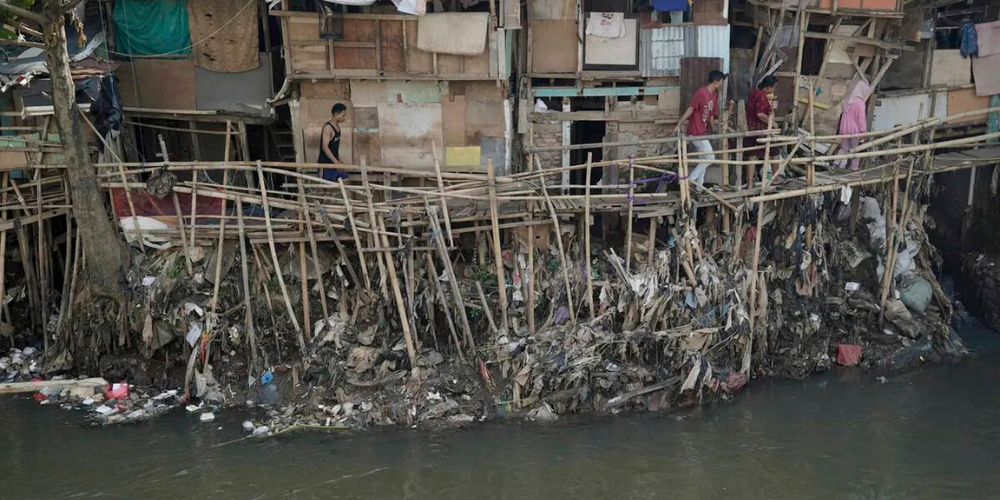
The condition of the Ciliwung River is reported to be worsening compared to two years ago. This was conveyed by a pollution and ecotoxicology expert from IPB University, Prof Etty Riani.
According to Prof Etty, the decline in river quality is driven by rapid population growth that is not matched by the availability of wastewater treatment plants (IPAL). As a result, household waste is discharged directly into the river without treatment.
“Various pollution parameters such as BOD, COD, nutrients (N, S, P), as well as toxic gases such as ammonia and H2S have exceeded quality standards. In addition, there are high levels of detergent and microplastics,” she said.
She also highlighted the persistent habit of people disposing of waste indiscriminately as well as weak field supervision due to limited human resources. This condition is further exacerbated by the narrowing of river flow caused by dense settlements that violate spatial planning regulations.
“Land does not increase, people increase, and eventually the river is encroached upon,” said Prof Etty.
Best Practice in Japan
Furthermore, she compared the situation with river management in Japan, which is considered successful within a decade. According to her, this success is supported not only by technology but also by discipline and strong systems.
“Japan does not compromise on riverbanks. Instead of buildings, they develop green open spaces (RTH) or sports facilities that function as reservoirs during high water discharge,” she emphasized.
In addition, Japan is said to have carried out large-scale wastewater treatment development, consistent law enforcement, and massive public education down to the community level regarding the 3R culture (reduce, reuse, recycle).
Strategic Recommendations
To prevent the condition of the Ciliwung from worsening in the next 20 to 30 years, Prof Etty recommended several strategic measures. These include the development of large-scale wastewater treatment plants with the obligation for every household to be connected to the system, as well as riverbank restructuring through the relocation of residents to proper housing.
She also emphasized the importance of restoring river buffer zones as green open spaces, carrying out reforestation in upstream areas, and strengthening law enforcement through strict fines and social sanctions for violators.
In addition, environmental audits of industries along the Ciliwung watershed need to be conducted regularly. The establishment of a cross regional institution from upstream to downstream under central government coordination is also considered important to ensure more integrated river management.
Prof Etty emphasized that improvement efforts cannot be carried out instantly. “If we are serious about combining infrastructure development, strict law enforcement, and continuous social behavior change, the results will only be seen in the next five to ten years. Without that, the Ciliwung will only become an increasingly polluted legacy for future generations,” she concluded. (dh) (IAAS/KAL)
