

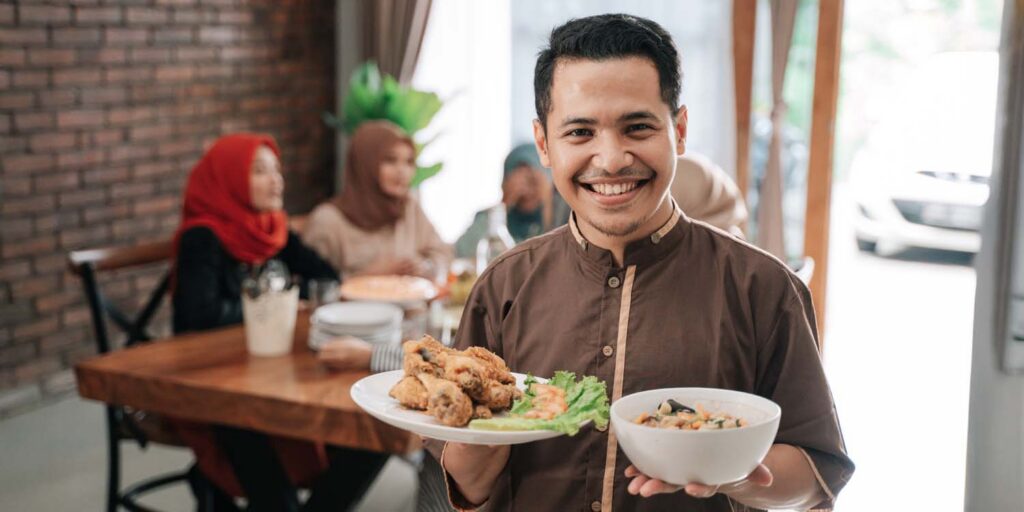
The “fancy warteg” trend, which has recently gained traction in various cities, demonstrates that innovation in the food industry continues to evolve in response to market preferences. Prof Ujang Sumarwan, a Professor of Consumer Science at IPB University, views this phenomenon as a reflection of business owners’ creativity in adapting to changing consumer behavior.
According to him, business owners are indeed required to continuously innovate in order to attract consumers’ attention. “Consumers always want something new. These fancy warteg are a form of entrepreneurs’ creativity in meeting those needs,” he said.
He explained that this trend is not driven by a single factor but rather a combination of various aspects, ranging from functional needs to social image factors. From a business perspective, innovation must manifest both physically, such as through more attractive venue designs, and non-physically, such as through improved service.
“Consumers will compare various dining options. They are looking for something new, comfortable, and still affordable. This is where consumer needs and business strategies converge,” he explained.
Furthermore, Prof Ujang emphasized the importance of experience in influencing consumer decisions. He noted that the atmosphere of the venue and the dining experience have now become key factors driving consumers to be willing to pay more.
“When consumers feel that the taste and the venue are a good fit, price often takes a back seat. Consumers are willing to spend more to enjoy a unique experience,” he explained.
This phenomenon, he continued, is highly relevant to the characteristics of today’s consumers, particularly younger generations like Gen Z, who tend to seek unique experiences and a comfortable or “cozy” atmosphere while enjoying their meals.
Regarding pricing, Prof Ujang noted that higher prices for the fancy warteg concept are reasonable. He explained that in consumers’ perceptions, price is often associated with quality.
“When prices are higher, consumers tend to assume that the quality of products and services is also better. Conversely, prices that are too low can actually raise suspicion,” he explained.
However, he cautioned that the sustainability of this trend depends heavily on market response. In the food and beverage industry, trend lifecycles tend to be short lived, so businesses must continuously adapt.
“It all depends on consumer response. If the response is positive, this concept can survive in the long term. But if not, it’s very likely that this trend is only temporary,” he said.
Prof Ujang added that the first six months are a crucial period for determining whether a business concept can survive or not. Given that consumers are dynamic and constantly seeking something new, continuous innovation is the key.
“The food industry must keep innovating. Consumers will always compare and seek new experiences. That is both a challenge and an opportunity for business owners,” he concluded. (AS) (IAAS/HNY)
