

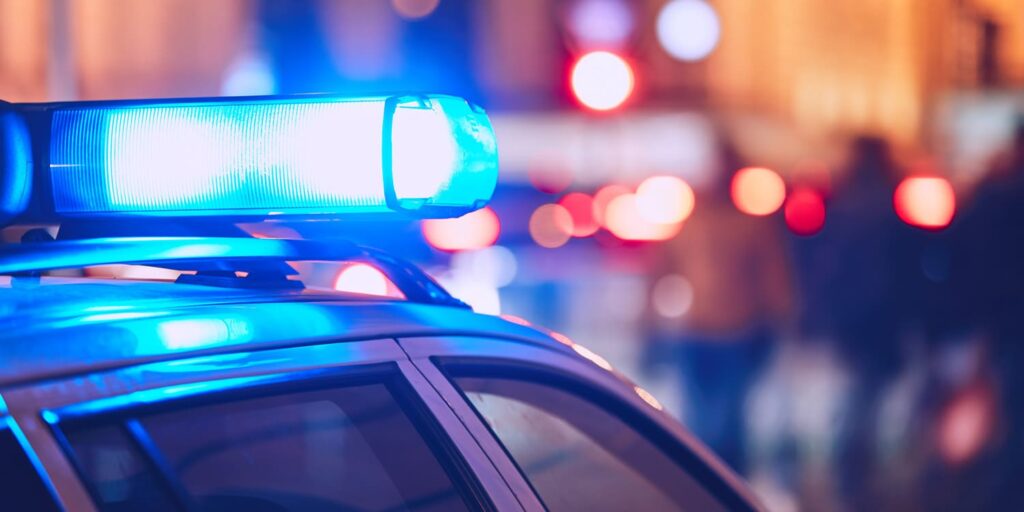
The tagline “Stop Tot Tot Wuk Wuk” is now more than just a joke among netizens, but a symbol of public resistance to the use of sirens and strobe lights on officials’ vehicles.
IPB University sociologist Dr Ivanovich Agusta believes this phenomenon has the potential to lead to civil disobedience.
According to him, this public rejection is part of the development of social norms. “Social norms are not static rules; they are formed in a process and maintained through social sanctions in the form of reprimands, ridicule, ostracism, and even mass action,” he said.
“Society is now producing social sanctions that are harsher than those imposed by state authorities,” emphasized the lecturer at the Faculty of Human Ecology at IPB University.
Dr Ivanovich believes that public rejection of strobe lights and sirens is triggered by various factors: the disregard for legal foundations, the accumulation of public frustration, and the strengthening of civil spirit after the mass demonstrations in late August 2025. Social media amplified this sentiment through the viral tagline “Stop Tot Tot Wuk Wuk.”
For the public, the use of strobe lights and sirens by officials is often seen as abuse, even though in some cases it is legal. This negative perception stems from the gap between formal rules and practices in the field, exacerbated by perceptions of arrogance and injustice.
Common forms of abuse include use for non-emergency activities, excessive use, aggressive and intimidating driving, endangering other road users, and asserting elite privilege.
The lack of law enforcement has led to repeated violations and further eroded public trust in the emergency system. “What is now dangerous is that the public’s response when they hear sirens has become skeptical,” said Dr Ivanovich.
He explained that the inappropriate use of sirens and strobe lights has led to a decline in public trust in the emergency system. Additionally, there is resistance to officers’ instructions, leading to increased horizontal tension on the roads. This situation, said Dr Ivanovich, has the potential to lead to civil disobedience.
“Road users who have been stuck in traffic jams are now strengthening public solidarity and collective awareness, ultimately forming a new norm of equality on the roads. On the other hand, the elite are also starting to restrain themselves, at least for the next few weeks,” he explained.
Dr Ivanovich believes that this public rejection is like a double-edged sword. On the one hand, an effective social control mechanism has emerged to promote accountability and equality. However, on the other hand, there is a risk of disrupting the social order and endangering public safety if it is not accompanied by clear policy solutions.
“Sirens and strobe lights must be used in accordance with the law. Without that, public resistance will continue to grow,” he concluded. (AS) (RWA/IAAS)
