

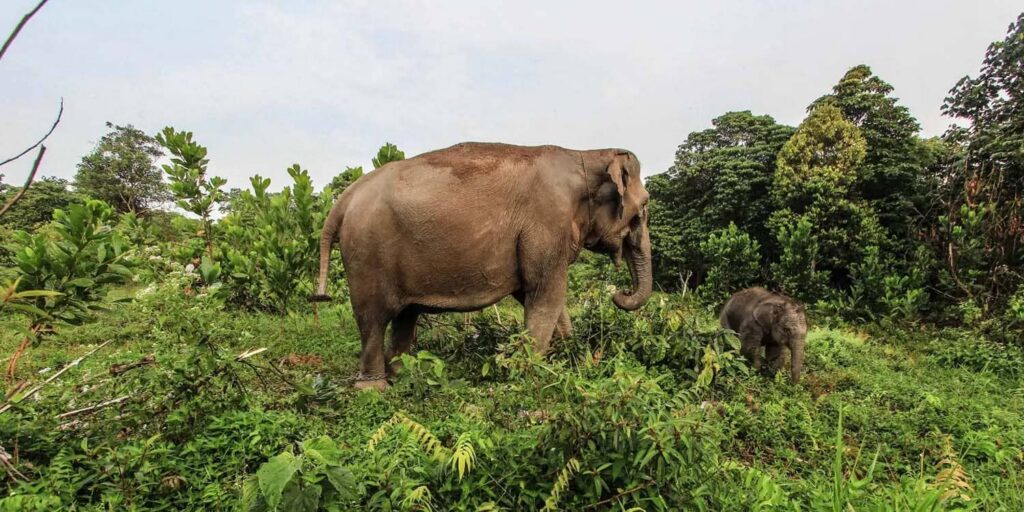
The death of a Sumatran elephant from Tesso Nilo National Park (TNTN), which fell victim to poaching, reflects the chronic nature of wildlife poaching in Indonesia. The tusks of the poached elephant, which ended up in Solo, show that poaching is not just a sporadic case of survival, but involves syndicates that reap huge profits from this illegal activity.
The actions of these poachers are particularly cruel because the elephant found by security forces was estimated to be 40 years old and had its trunk and tusks missing. This Sumatran elephant is a protected species.
The authorities’ successful arrest of the perpetrators reminds us all that the reality of illegal hunting syndicates is acute in Indonesia, involving various parties such as hunters, shooters, financiers, ammunition owners, middlemen, and ivory dealers. The 7,6 kilograms of elephant tusks were sold to several middlemen, and ironically, these protected wild animals had to die just so their tusks could be made into cigarette pipes produced in Central Java and East Java.
The Severity of Illegal Poaching
The trade in wild animals in Indonesia is severe because it involves organized international networks. The latest case shows that protected animals from Kalimantan and Papua are smuggled through the black market to Thailand, India, Malaysia, Vietnam, and even Europe.
This confirms that Indonesia is not only a market but also a major source in the global wildlife trade chain. The government considers this crime a serious threat to the national ecosystem and biodiversity sustainability.
Factors Driving the Rise of Wildlife Poaching
The acute problem of wildlife poaching is certainly not a spontaneous occurrence. Nor is it solely motivated by survival, as is often claimed in court.
Several factors contribute to the continued rise in wildlife poaching and trade, including lenient penalties and fines that fail to deter perpetrators.
In addition, high international demand and the proliferation of the global black market for exotic animals, both as pets and as ingredients in traditional medicine, also encourage illegal hunting.
The involvement of organized networks in facilitating cross-border distribution with sophisticated logistics and financing systems makes it difficult to eradicate wildlife poaching.
Internally, it must be acknowledged that although there are regulations governing the protection of wildlife and penalties for poachers, in reality, supervision in the field is still lacking due to the vastness of the forest areas that must be monitored and the limited number of officers. In addition, economic factors also play a major role as communities living near forests are tempted by the prospect of quick income.
What Should Be Done?
Poaching is not a simple problem with an easy solution. Success in reducing poaching rates depends heavily on a multidimensional approach.
The main thing that needs to be done is stricter law enforcement, which will lead to a reduction and elimination of wildlife poaching. It is urgent to revise the law to impose heavier penalties and create a deterrent effect. This includes the imposition of large fines and consistent prison sentences, especially for wildlife poaching syndicates.
In addition, strengthening forest surveillance and patrols by increasing the number of forest rangers and officers in areas prone to poaching, and utilizing technology (drones, camera sensors, AI monitoring) are a must.
As mentioned earlier, wildlife poaching involves international networks. Therefore, international cooperation is needed through collaboration with countries that are destinations for wildlife trade to break the black market chain and also for the exchange of intelligence data across countries.
Another important issue to address is the empowerment of local communities so that they do not get involved in the poaching chain. It is necessary to prepare sustainable alternative livelihoods such as ecotourism, agroforestry or other activities, as well as education on the importance of wildlife conservation.
Another effort is to raise public awareness about the impact of wildlife trade through public campaigns and education. Awareness of the importance of wildlife in maintaining the balance of nature must be done early by integrating conservation issues into the education curriculum.
From various cases in the field, community-based conservation programs have proven to be the most effective. This is because this approach fosters a strong sense of ownership and awareness that wildlife is part of community life that must be protected, which is the key to success.
Conservation must involve indigenous and local communities as guardians of the forest who have lived in the area for generations. In addition, providing incentives to villages that successfully protect wildlife populations is a necessity.
For Indonesia, reducing the number of illegal hunts will reflect the country’s seriousness and uphold its reputation in dispelling the international perception that Indonesia is at the center of the international wildlife trade. (IAAS/KQA)
Prof Ronny Rachman Noor
Professor, Faculty of Animal Science – Expert in Ecological Genetics, IPB University
