

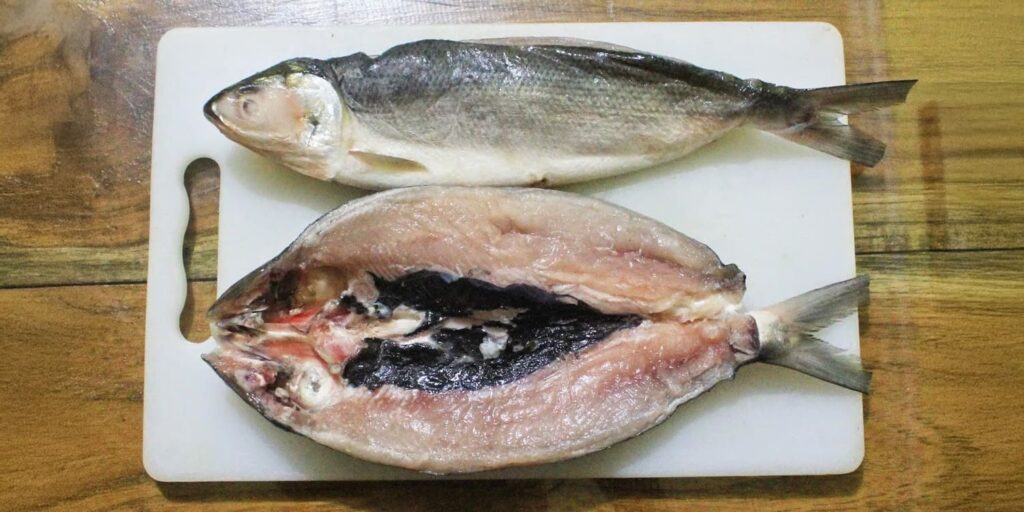
For many people, eating fish is often synonymous with the hassle of separating the bones from the meat. However, milkfish (Chanos chanos) is an exception: its bones can be easily removed. What is the scientific reason behind this phenomenon?
Prof Joko Santoso, Professor at IPB University’s Department of Aquatic Product Technology, explains that the ease of removing milkfish bones is not a coincidence.
“Milkfish bones can be removed because of a combination of skeletal anatomy and deboning techniques (butterfly + pull) that utilize bone-muscle connections. As a result, the skeleton can be removed relatively intact during processing,” he explained.
He emphasized that not all fish can be treated the same way as milkfish. It depends heavily on the type of fish. “Many fish have intermuscular bones that make perfect deboning difficult. Only a few species with specific bone structures allow for mechanical methods like those used for milkfish,” he added.
Besides the bones, Prof Joko also mentioned the behavior of female milkfish, often described as “hard to catch.” According to him, this phenomenon is most likely influenced by the reproductive phase, size and behavior, or habitat changes during the spawning season.
“This claim is supported by studies on hormones and maturation, although there is no single absolute evidence. This kind of behavior is also seen in other fish species during the reproductive cycle,” he explained.
Furthermore, milkfish is not only unique in terms of anatomy, but also superior in terms of nutrition. Prof Joko explained that milkfish is rich in protein, unsaturated fatty acids, and four essential minerals (calcium, magnesium, iron, and zinc), as well as vitamin B12.
“Its uniqueness lies in the combination of the nutritional value of its meat and the potential use of its bones and scales for calcium and collagen products,” he said. (dh) (IAAS/NRA)
