

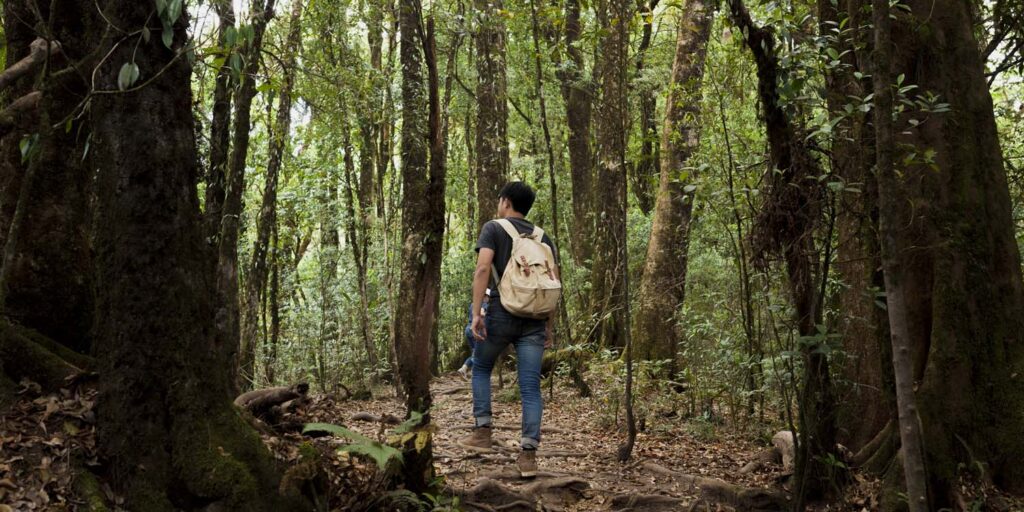
Amid the increasing pressures of urban life and the threat of the triple planetary crisis (climate change, biodiversity loss, and environmental pollution), forests are seen as having a far broader role than simply serving as green spaces.
IPB University Prof Siti Badriyah Rushayati explains that in addition to functioning as carbon sinks and ecosystem guardians, forests also contribute directly to human health through the concept of the healing forest or forest therapy.
Thanks to Phytoncides in the Healing Forest
According to Prof Siti, the environmental services provided by forests not only play a role in maintaining climate and ecosystem resilience but also offer direct benefits to human health through the concept of the healing forest. Various studies have shown that exposure to a forest environment has a positive impact on both physical and mental health.
“Exposure to forest air can increase the activity of natural killer cells, which play a role in fighting infections and cancer cells. In addition, forest therapy has also been proven to reduce stress levels and improve mental health,” she explained during her Inaugural Lecture as a Full Professor at IPB University on Saturday (6/27).
These benefits are closely linked to the presence of phytoncides, natural volatile compounds produced by plants as a defense mechanism against microorganisms, insects, and environmental stressors. For humans, these compounds offer various health benefits.
“Phytoncides possess antioxidant properties that can protect the body’s cells from damage caused by free radicals. Regular exposure to these compounds can also help lower blood pressure, reduce stress, and improve mental well being,” she explained.
However, Prof Siti emphasized that healing forest therapy cannot be conducted haphazardly. The therapy site must meet certain requirements, such as low noise levels, good air quality, safe terrain conditions, and an atmosphere that fosters tranquility for visitors.
“In a healing forest, all five senses must be able to harmonize with nature. If noise levels are too high, the relaxation process will not be optimal,” she said.
Furthermore, she noted that healing forests also hold significant economic potential through the development of eco-tourism. One such example has been implemented at the Ir H Djuanda Grand Forest Park, which offers a comprehensive healing forest tour package complete with dedicated trails, nature-based therapeutic activities, and guidance from trained guides.
“This can serve as a new economic source while simultaneously raising public awareness about the importance of preserving forests,” she said.
She emphasized that efforts to address the triple planetary crisis require a landscape-based approach, ecosystem conservation and restoration, the development of urban forests, increased pollutant absorption by vegetation, the use of technology, and the involvement of various stakeholders.
“Climate resilience, ecosystem resilience, and public health can only be achieved if development proceeds in harmony with the forest’s environmental services,” she concluded. (AS) (IAAS/LAN)
